home-buying

10 Common Questions About Home Inspections (And Why They Matter)

By Stephanie Goedl
May 21, 2025

When buying a home, there’s a lot to think about—offers, appraisals, escrow, and inspections. For many buyers, the home inspection process can feel like just another box to check. But it’s one of the most important steps in protecting your investment and making sure you’re fully informed about the property you’re purchasing.

Whether you’re a first-time buyer or just need a refresher, here are 10 common questions about home inspections—and why they matter.

Photo Courtesy of Canva pro

1. What is a home inspection, and do I really need one?

A home inspection is a professional evaluation of a property’s condition, typically done before finalizing a home purchase. Even if the house looks perfect, an inspection can reveal hidden issues that could cost thousands down the line, making it a wise investment for peace of mind.

2. What does a home inspection include?

Most inspections cover the home’s major systems and components, including the roof, plumbing, electrical, HVAC, foundation, attic, and appliances. After the inspection, you’ll receive a detailed report outlining any concerns, defects, or areas that might need attention.

3. What will it cost?

Costs can vary depending on the size, age, and location of the property, but most home inspections cost between $400 and $700. Although it may feel like an added expense, it’s a small price to pay for the valuable insights it provides.

4. Why can’t I do it myself?

Even if you’re handy, only a certified home inspector has the training, tools, and experience to identify structural, mechanical, and safety issues that may not be visible to the average buyer. Their objective report is crucial to making an informed decision.

5. Can a house fail a home inspection?

Not exactly. An inspection doesn’t result in a “pass” or “fail”—instead, it offers a snapshot of the home’s condition. It’s up to the buyer to decide how to move forward based on the findings.

6. How do I find a home inspector?

Your real estate agent can recommend trusted inspectors they’ve worked with. You can also search online or check professional organizations like ASHI (American Society of Home Inspectors) or InterNACHI for qualified professionals.

7. When do I call a home inspector?

Once your offer is accepted, you’ll schedule a home inspection during your contingency or due diligence period. Time is usually limited, so acting quickly is best to keep things moving forward.

8. Do I have to be there?

You’re not required to attend the inspection, but it’s highly recommended. Walking through the property with the inspector lets you ask questions in real time and see any potential issues firsthand.

9. What if the report reveals problems?

Almost every home has a few issues—it’s completely normal. Depending on what’s found, you may be able to negotiate with the seller for repairs, credits, or a price reduction. Your agent will help guide you through those conversations.

10. If the house is in good condition, did I need an inspection?

Yes! A clean report offers peace of mind and can help you plan for future maintenance. It’s reassurance that you’re making a sound investment—and that’s always worth it.

Final Thoughts

A home inspection isn’t just another step in the home-buying process—it’s a powerful tool that helps protect you from unexpected surprises. With the right inspector and guidance from your real estate agent, you’ll be in a much better position to move forward with confidence. At Century 21 Discovery, our agents are here to help you every step of the way.

Stephanie Goedl

About the author: Stephanie Goedl is Chief Operating Officer and Broker/Owner of CENTURY 21 Discovery. If you are interested in becoming part of the CENTURY 21 Discovery team or would like more information about our services we provide contact us at 714.626.2069 or Careers@C21Discovery.com.

What’s Going On With Mortgages?

By Joe Lins
July 21, 2024

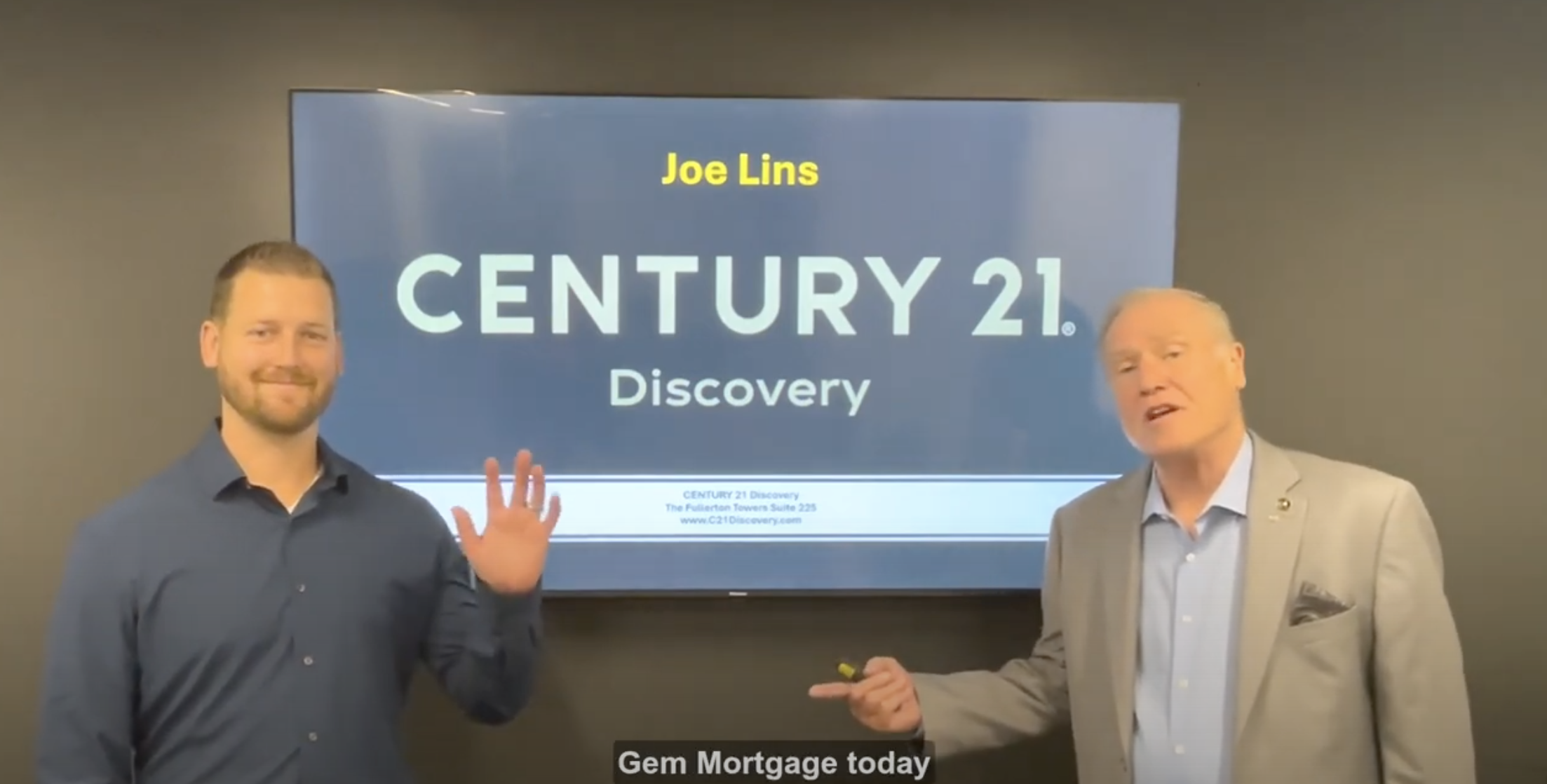
Recently, I had the pleasure of speaking with Ryan World from Gem Mortgage. We discussed the current mortgage landscape and what potential homebuyers need to know. For agents reading this, I encourage you to share this with your clients. Here’s a recap of what we covered in that conversation:

  • Different Loan Programs and Down Payments
  • Jumbo Loans
  • Current Interest Rates
  • Buying Now vs. Waiting to Buy
  • Having a Buyer Strategy
  • Why a Pre-Approval is Important

Different Loan Programs and Down Payments

Most people opt for conventional loans these days when it comes to loan programs. However, there are several options available:

  • VA Loans: Zero down payment.
  • FHA Loans: Requires a 3.5% down payment.
  • Conventional Loans: As low as 3% down unless it’s a high balance, which needs 5% down.
  • Jumbo Loans: Typically require around 20% down, though you can put less down for a higher interest rate.

Understanding Jumbo Loans

A jumbo loan is any amount exceeding the national conforming loan limit, which is currently $766,550 for Fannie Mae and Freddie Mac. These loans usually have better interest rates but are more challenging to qualify for.

Current Interest Rates

Interest rates are currently in the high sixes to low sevens. The market is quite volatile, and rates can change quickly based on economic indicators and Federal Reserve announcements. Recently, the Consumer Price Index released favorable news, causing a slight improvement in interest rates. However, market fluctuations are constant, and rates can shift based on new information.

Buying Now vs. Waiting for Lower Rates

A common question is whether to buy now or wait for interest rates to drop. Ryan suggests buying now, even with higher interest rates. The rationale is that if rates drop in the future, you can refinance. Waiting for lower rates could lead to increased home prices due to higher demand, making it more challenging to find a desirable property at a reasonable price.

The Importance of a Buyer Strategy

Buyers need a strategy, and one of the most crucial steps in buying a home is hiring the right REALTOR. A knowledgeable, competent real estate agent can guide you through the process to achieve your goals. Having a strategy in this fast-paced real estate market is important, and the right agent can help with this. Our CENTURY 21 Discovery agents are trained for exactly this!

Why Pre-Approval Matters

Getting pre-approved is essential. It helps you understand your budget, manage your expectations, and gives you confidence when working with your real estate agent as you start your home search. Knowing your financial standing upfront prevents disappointment and ensures you focus on homes within your price range.

Contact Information

Those interested in learning more about mortgage options or starting the pre-approval process can contact Ryan World at Gem Mortgage. His phone number is 714-569-3636, extension 2.  

Charge on!

You can watch the video of our conversation HERE.

You can listen to the conversation HERE.

Joe Lins

About the author: Joe Lins is President, CEO and Co-owner of CENTURY 21 Discovery. If you are interested in becoming part of the CENTURY 21 Discovery team or would like more information about our services, training and coaching we provide, contact Joe at 714.626.2069.

Understanding Frequently Used Terminology in Your Transactions

By Amy Leonhardt
February 2, 2024

New real estate agents may find themselves confronted with terms and acronyms that are unfamiliar. Understanding these terms is crucial for success. Here is a brief guide to some of the most-used terms and acronyms used in real estate and escrow to help newer agents: 

Real estate agent showing paperwork to clients
Photo by MART PRODUCTION on Pexels.com

APN

APN (Assessor’s Parcel Number) is a unique number assigned to a parcel of real estate. It is used to identify property for legal and tax purposes. It is included in the legal description, and will be referenced on the Grant Deed and the preliminary title report.

CMA

CMA (Comparative Market Analysis) helps determine a property’s market value by comparing it to similar properties in the area, and it is an important tool for pricing strategies.

Closing Costs

Closing Costs are the expenses, beyond the property price, that both buyers and sellers incur to complete the transaction in escrow. Some examples of these costs include title insurance, processing fees, appraisal fees, messenger fees, and taxes. Note that buyer and seller closing costs are not equal, so keep in mind that if “Both” is checked on the RPA, closing costs will be split 50/50, instead of each paying their own fees, and buyers typically have more closing costs.

COE

COE (close of escrow) is the date when buyer and seller complete the sale, and ownership officially transfers to the new owner.  This date is determined by what is agreed upon in the contract. Funds have been transferred, principals have fulfilled their contractual obligations, documents have been recorded, and the transaction is complete. 

EMD

EMD (Earnest Money Deposit) is the buyer’s deposit to escrow that shows the seller the offer was made in good faith. The agreed-on contract will determine the amount of the EMD, the form it can come in (check or wire), and the deadline for depositing into escrow. Once escrow is opened, the escrow company will contact the buyers to provide them with wire instructions. Due to increasingly rampant wire fraud, always have your buyer confirm wire instructions directly with a known verified number for your escrow company, and never take instructions via email or from an unsolicited call. This will help protect your client’s funds.

EOI

EOI (Evidence of Insurance) is a document confirming the details of an insurance policy, and will be required by a buyer’s lender. It is typically requested by escrow on behalf of the buyer, and the insurance company provides the proof of insurance.

FHA

FHA (Federal Housing Administration) is a federal agency that insures mortgages with low down-payments. These loans typically have more stringent requirements than conventional loans, and the process may take a bit longer than a conventional loan, though they are a great option for buyers with limited down-payment funds.

NHD

NHD (Natural Hazard Disclosure) Report is a statutory document that discloses potential risks such as earthquakes or floods on a particular piece of property. Buyer and seller will sign to indicate they have received and reviewed the report.

Familiarizing yourself with these terms and dedicating yourself to continuous learning and training will benefit your career in this ever-changing real estate market.

About the author: Amy Leonhardt is an escrow assistant for Equity Escrow Group, Ltd. in Fullerton, California. For more information on the services provided by Equity Escrow Group please contact them at 714.626.2095 or visit their website www.equityescrowgroup.com