Buyers

What’s Going On With Mortgages?

By Joe Lins
July 21, 2024
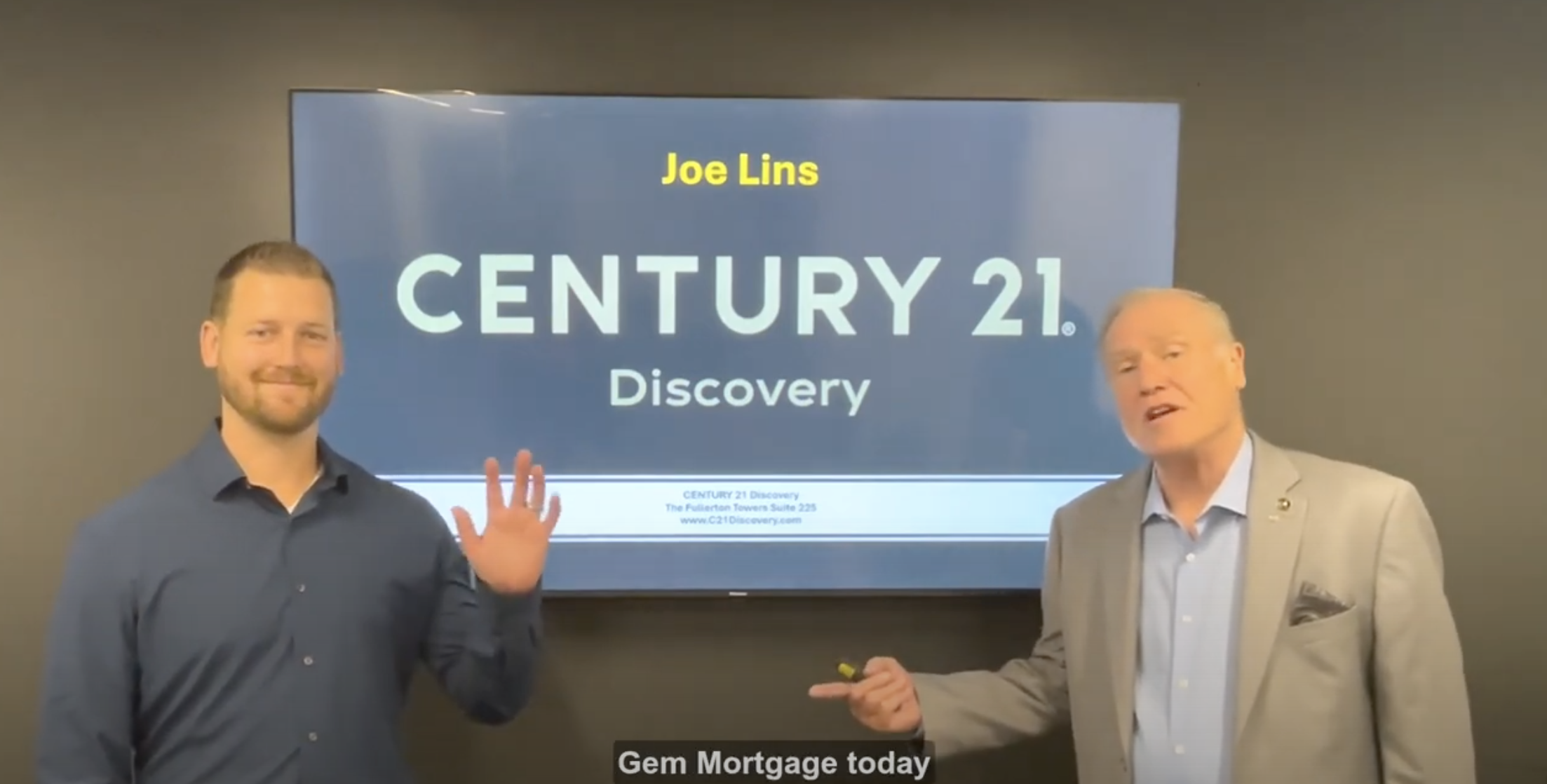
Recently, I had the pleasure of speaking with Ryan World from Gem Mortgage. We discussed the current mortgage landscape and what potential homebuyers need to know. For agents reading this, I encourage you to share this with your clients. Here’s a recap of what we covered in that conversation:

  • Different Loan Programs and Down Payments
  • Jumbo Loans
  • Current Interest Rates
  • Buying Now vs. Waiting to Buy
  • Having a Buyer Strategy
  • Why a Pre-Approval is Important

Different Loan Programs and Down Payments

Most people opt for conventional loans these days when it comes to loan programs. However, there are several options available:

  • VA Loans: Zero down payment.
  • FHA Loans: Requires a 3.5% down payment.
  • Conventional Loans: As low as 3% down unless it’s a high balance, which needs 5% down.
  • Jumbo Loans: Typically require around 20% down, though you can put less down for a higher interest rate.

Understanding Jumbo Loans

A jumbo loan is any amount exceeding the national conforming loan limit, which is currently $766,550 for Fannie Mae and Freddie Mac. These loans usually have better interest rates but are more challenging to qualify for.

Current Interest Rates

Interest rates are currently in the high sixes to low sevens. The market is quite volatile, and rates can change quickly based on economic indicators and Federal Reserve announcements. Recently, the Consumer Price Index released favorable news, causing a slight improvement in interest rates. However, market fluctuations are constant, and rates can shift based on new information.

Buying Now vs. Waiting for Lower Rates

A common question is whether to buy now or wait for interest rates to drop. Ryan suggests buying now, even with higher interest rates. The rationale is that if rates drop in the future, you can refinance. Waiting for lower rates could lead to increased home prices due to higher demand, making it more challenging to find a desirable property at a reasonable price.

The Importance of a Buyer Strategy

Buyers need a strategy, and one of the most crucial steps in buying a home is hiring the right REALTOR. A knowledgeable, competent real estate agent can guide you through the process to achieve your goals. Having a strategy in this fast-paced real estate market is important, and the right agent can help with this. Our CENTURY 21 Discovery agents are trained for exactly this!

Why Pre-Approval Matters

Getting pre-approved is essential. It helps you understand your budget, manage your expectations, and gives you confidence when working with your real estate agent as you start your home search. Knowing your financial standing upfront prevents disappointment and ensures you focus on homes within your price range.

Contact Information

Those interested in learning more about mortgage options or starting the pre-approval process can contact Ryan World at Gem Mortgage. His phone number is 714-569-3636, extension 2.  

Charge on!

You can watch the video of our conversation HERE.

You can listen to the conversation HERE.

Joe Lins

About the author: Joe Lins is President, CEO and Co-owner of CENTURY 21 Discovery. If you are interested in becoming part of the CENTURY 21 Discovery team or would like more information about our services, training and coaching we provide, contact Joe at 714.626.2069.


Helping Your Clients Have A Stress Free Move

By Suzy Lins

April 19, 2023

Moving to a new place can be a stressful experience for your clients, but with proper planning and organization, you can help them minimize the stress and make the process smoother. Here are some tips to offer your clients for a stress-free move:

  1. Create a plan: Before they start packing, help them create a plan for their move. Help them make a checklist of everything they need to do, including hiring a moving company, packing, and changing their address. Even better would be to create a checklist to include in your listing agreement.
  2. Declutter: Before they start packing, suggest they go through their belongings and get rid of anything they don’t need or want anymore. This will save them time and money in the long run. Have recommendations of organizations in your area where they can donate items they don’t need. 
  3. Packing Prep: Suggest they start collecting boxes early on to use for packing. If you have clients who have recently moved, ask them if their boxes can be reused by another client.
  4. Pack smart: Guide them to use sturdy boxes and packing materials, like bubble wrap, blankets or towels, to ensure their belongings are protected during the move. Suggest they put heavier items, such as books, into suitcases with wheels. Label each box with its contents and which room it belongs in. Using color coded labels for room destinations is a time saver when unpacking the moving truck.
  5. Hire a reputable moving company: Help them find a moving company with a good reputation. Have a few reputable moving companies you can recommend. Otherwise, encourage them to read reviews and ask for recommendations from friends and family.
  6. Stay organized: Advise them to keep important documents and items, such as passports and birth certificates, in a separate box or folder that they carry with them during the move.
  7. Take breaks: Moving can be physically and emotionally exhausting. Suggest they take breaks, stay hydrated, and eat healthy snacks to keep their energy levels up. Dropping off water and snacks for them the day before the move is a nice touch.
  8. Stay positive: Moving can be a new and exciting adventure. Remind them to focus on the positive aspects of their move and the new opportunities that await them.

By following these tips, your clients can reduce stress and have a more enjoyable moving experience.

About the author: Suzy Lins is the Communications Director for CENTURY 21 Discovery and a Business Etiquette Consultant. For more information about CENTURY 21 Discovery you may call (714) 626-2000.

Why Buyer Letters Are A No-No

By Stephanie Goedl
June 11, 2021

(Transcript of our Podcast Ep. 41)

Hey, everybody, and welcome back. It’s Stephanie Goedl here. You know, it’s been a few months since we’ve recorded, we decided to take a short break to reevaluate our content and make sure that the education we are providing is relevant for what’s going on today. So, with that, let’s hop right in and jump into buyer letters.

Most of you are aware of Buyer Letters especially if you’ve been in the business for a long time. One way to really assist buyers in standing out when writing offers and when you’re up against multiple offers has always been to submit a Buyer Letter. However, now, that is kind of a No-No. I want to talk about that today and dive in just for a few minutes and talk about why that is. 

With everything that’s been going on in our country lately, there’s a lot of talk around discrimination, whether intentional or unintentional. When you dive into Buyer Letters, it’s something to really consider because your sellers sometimes are making a decision that’s based off of those letters, and not necessarily on the terms of the agreement.

The California Association of Realtors as well as our National Association of Realtors, have taken a stance against Buyer Letters and are really pushing that we should not be submitting those if there’s personal information or photos attached to those offers. To avoid that intentional or usually it’s unintentional bias or discrimination against those buyers.

Let’s just talk about an example really quick. Fun fact, actually, before we dive into that example, did you know that as of November 2020 there were 22 protected classes in the state of California. Back to my example. When you receive a letter, many times the buyers pour their heart and soul and tells their story as to why they want to purchase the home. Example: “This big backyard is perfect for my children to run around and play and get some fresh air.” Now, if you know that discrimination is not even in your mind, you can look at that and say, Wow, that’s wonderful, these three kids definitely need a place to run and play. I want to go with them. What’s the problem with that? If you are picking that offer, based on the fact that the letter really tugged at your heartstrings as a seller, you can be considered to violate the family status, which is a protected class. Especially when you’re looking at another offer from a single person who has no children.

You really want to avoid Buyer Letters because they have the potential to create a level of unintentional discrimination. If you’re a buyer’s agent you should avoid submitting those letters on behalf of your buyer. If you’re a listing agent, you want to have that conversation with your seller. And let them know that again, 98% of the time, I would say it’s very unintentional bias. But that being said, it’s still there, whether or not it’s being recognized. Let them know about the possible hiccups that can come with reviewing those offers and highly encourage them to look at the terms only, because this is a business transaction. As a professional REALTOR you need to encourage them to look at just the terms of the offer.

So how do you have that conversation with your seller? The California Association of Realtors has a great piece that you can actually share with your sellers that goes into this in a little bit more detail. And then get it in writing from them that they will not be accepting Buyer Letters. Also, put that into the MLS and have that conversation with the buyer’s agents on the other side and let them know the seller has decided not review any buyer letters. That keeps it very neutral and everybody in a really safe space. So, with that, I just wanted to pop on and give you a quick update on what has changed in our industry over the last few months. If you have any questions as always, do not hesitate to reach out. Can’t wait to see you on the next episode. Have a great day.

Listen to the Podcast here:

Ep.41 | Why Buyer Letters Are A No-No Discover Your Real Estate Career

Stephanie Goedl

About the author: Stephanie Goedl is Chief Operating Officer and Broker/Owner of CENTURY 21 Discovery. If you are interested in becoming part of the CENTURY 21 Discovery team or would like more information about our services or training we provide contact us at 714.626.2069 or Careers@C21Discovery.com.

How Do I Buy A Home During COVID-19?

By Joe Lins
May 5, 2020

Serious Buyers are asking “How do I buy a home during COVID-19?” People still need shelter and are looking for a home to buy. Let them know they can go through the home buying process while maintaining physical distancing and safe standards with these steps. These talking points will help you guide your Buyers as they find and purchase a home.


Joe Lins

About the author: Joe Lins is President, CEO and Co-owner of CENTURY 21 Discovery. If you are interested in becoming part of the CENTURY 21 Discovery team or would like more information about our services or training we provide contact Joe at 714.626.2069.

Don’t Forget The Homeowners Insurance

By Stephanie Goedl
June 26, 2019

Don’t Forget The Insurance

Have you ever had a real estate transaction that was held up until the buyer could obtain homeowners insurance? In this episode of our podcast insurance agent Michael Williams of Williams Insurance discusses the importance of starting the insurance process early and situations of fire-risk, flood insurance and past claims that could hold up the transaction.

Why Order The Policy Early?

Homeowners insurance is such a big piece of owning a home but it’s usually one of those last-minute items buyers think of in the home buying process. It really shouldn’t be. Michael suggests that once you open up escrow the buyer should contact their insurance agent. It’s not that hard to get an initial quote even before escrow or the lender start requesting information. One of the main reasons to start the process early is due to the fire exposures in our state. Unfortunately, the wildfires have been tremendous and Michael explained that they are reshaping how the industry works. He said that people are going to be very shocked to see their premiums change and a lot of non-renewals. Houses that you wouldn’t think are fire-risk are going to have a much more difficult time getting coverage.

Fire-Risk

I was in Sacramento recently for the annual California Association of Realtors conference and this was a hot topic. Fire-risk on properties is impacting the housing affordability. I asked Michael about the how the insurance industry is dealing with this. He explained that there is a system called “Fireline” that assesses the “score” of the house and the likelihood of exposure to a wildfire. That number combined with a special hazard square that they come up with determines whether a carrier wants to write a policy for a house in that area. The mapping for that is changing and also the acceptable scores are changing. Michael said carriers used to be much more lenient than they are now. Houses that you wouldn’t think have a brush exposure are getting denied.

There are a number of things that come into play when a home or area is “scored” through this system. They look at road access, utility quality, the wind and a number of different things that go into deciding whether it’s acceptable. Michael told us about a program the state runs called Fair Plan and how the insurance carriers partner with this government fund for hard-to-place risks. It can be a lot more expensive, on average a 25% increase over what most people expect their premiums to be. They will take higher risk properties but it’s more complicated and there are multiple layers of the policy.

Here’s a scenario that happens more often than you think and it is the exact reason you should encourage your buyers to start the insurance process early:

You’re nearing the close of escrow, the lender is requesting proof of homeowner’s insurance, you’ve removed contingencies and the buyer learns that the property is in what the insurer considers a high-risk area. Two things could derail this transaction – 1) The policy is more expensive than they can afford or 2) The property is uninsurable. What do you do now?

Flood Insurance

Another thing to consider is if the property is going to need flood insurance. Michael explained that they are re-mapping the flood zones which means that flood insurance is another policy that could be required by the lender. Homes that have not been required in the past to get flood insurance are now needing it. He reminded us that this requirement will be an additional cost to the buyer, so it‘s in everyone’s best interest to call the insurance agent as soon as possible to avoid surprises at the close of escrow.

Past Claims

Michael explained that insurance companies also look at “claims history” on the property. The claims history of the property made by the prior owner could affect the eligibility and rate for the buyer. Not all carriers have that stipulation but a number of them do. Another thing to keep in mind is the claims the buyer has had at their current property could actually follow them to the new property they are purchasing. This could also affect the rate and insurability of the property.

We hope this information will help you guide your buyers as they start the homebuying process. You don’t want to hold up an escrow with something that could have been avoided with a little bit of forewarning. Knowing these potential hold ups will allow you to get your buyer on the right track from the start.

Listen to the show to discover more about the insurance process for homebuyers.


Stephanie Goedl

About the author: Stephanie Goedl is Chief Operating Officer and Broker/Owner of CENTURY 21 Discovery. If you are interested in becoming part of the CENTURY 21 Discovery team or would like more information about our services or training we provide contact us at 714.626.2069 or Careers@C21Discovery.com.


Michael Williams is the president of Williams Insurance in Fullerton, California. They have been around since 1941. They are a Property and Casualty Agency that handles home, auto and umbrella policies as well as commercial, health and life insurance. You can reach Michael at 714-526-5588 or mwilliams@williamsinsurance.com.

The Buyer Interview

By Joe Lins & Stephanie Goedl
January 29, 2019

The Buyer Interview is the initial meeting with your buyer to find out what their real estate goals and aspirations are. This is important because once you figure out what your client wants you can do a better job of finding that property for them. Our value as a Realtor is finding the house that is good for them. The only way you can do that is by asking questions and building buyer loyalty.

Listen to our podcast to learn what questions to ask when interviewing buyers.

Listen to the podcast here:


Watch the video of the podcast here:

If you would like a copy of our Buyer Interview Questionnaire we would be happy to share it with you! Just email us at Careers@C21Discovery.com. To get the latest podcast episodes subscribe on iTunes, Google Play or Podbean.

About the authors: Joe Lins is President, CEO and Owner of CENTURY 21 Discovery. Stephanie Goedl is Chief Operating Officer and Broker/Owner of CENTURY 21 Discovery. If you are interested in becoming part of the CENTURY 21 Discovery team or would like more information about our services or training we provide contact us at 714.626.2069 or Careers@C21Discovery.com.

Stephanie Goedl

Pre-Appraisal Checklist

By Chris Smith
July 24, 2018

There are some things you can do to help ensure the home appraisal process goes smooth. See this checklist provided by the residential appraisal management company PropertyRate.


About the Author: Chris Smith is a Senior Loan Officer (NMLS  #253394) with New American Funding. For more information about home financing you may contact him at 714.401.5921. 

Home Buying: Is this the right time?

By Mariella Reyes
April 19, 2018

I recently had the opportunity to sit down with Ismael Chavez of TEAM ChavezHomes at CENTURY 21 Discovery to discuss if this is the right time to buy a home.

“Clients always ask me if this is a good or bad time to buy their home,” CENTURY 21 Discovery’s Real Estate agent, Ismael Chavez says. Eleven years after, buyers entering the market are still shaken up by 2008’s housing bubble. According to Chavez it’s unlikely another bubble will happen again soon because of the fixed interest rates the circumstances are different.

Photo Credit: Marlon Marshall Parungao

Ismael Chavez began his real estate career in 2007, right before the market crash. “Those were dark times for the real estate industry, but the experience made me a stronger and better REALTOR®. I care about my clients,” he says. Shortly after the housing bubble, he expanded his practice and formed his team of agents operating under the business name of TEAM ChavezHomes at CENTURY 21 Discovery located in Fullerton, CA.

Chavez is optimistic about the future of the industry.

Ismael, what are some tips you can give future home buyers and sellers?

“It’s a seller’s market; we get many buyers but we have a shortage of homes for sale. It’s a great opportunity for those who’ve been thinking of moving and selling their homes. Although there’s never a wrong time to buy, home buyers will have to be competitive and focused during their search!”

We’ve added some extra pointers for both Buyers and Sellers below.  Happy house hunting.

About the Author: Mariella Reyes, is an Independent Content Writer for TEAM ChavezHomes of CENTURY 21 Discovery.  She’s worked as a content writer and producer for brands in the industries of escrow, mobile, fashion, plastic surgery, and beauty, and was the Marketing Coordinator during her time on the Board of Directors for Lean IN Los Angeles in 2016-2017. You can contact her at: mariella.reyesm@gmail.com


Prequalified or Preapproved: Which Is Right For You?

By Nicole Johnson of New American Funding*
September 13, 2017
Originally published on September 12, 2017

(Photo courtesy of New American Funding)

This is it. You’re ready to make the move into homeownership. From all the online searching you’ve done, you know you need to get “pre-something-ed” to prove you are a serious buyer. However, which is it: prequalified or preapproved? Both sound good, but they serve different purposes.

Getting Prequalified

When you ask a Loan Officer to perform a prequalification, you can do it online, by phone, or in person. They’ll ask you to share information, often verbally, on your credit, your income; assets (savings, investments, retirement accounts the amount of equity you have in any real estate you currently own); and the amount of debt you owe.

It’s a conversation that helps establish some financial parameters before you start looking at and making offers on homes by helping you answer two key questions:

  • What price range should I be looking in when I start my search?
  • Am I ready to do this, or do I need to save more or pay down more debt?

While the process is useful, especially for first time homebuyers, it isn’t rigorous enough to distinguish you from the other attendees at an open house or when you request a showing. The reason is that the letter is based off something akin to a “best guess” by the Loan Officer, it’s not reviewed by an Underwriter, and doesn’t address the question that matters most to sellers, Real Estate Agents, and to you: Can they/we expect to be approved for the type of mortgage needed to buy this home?  To answer that, you need to be preapproved.

Preapprovals Open More Doors

The preapproval process is like a test drive before you submit your application for a mortgage. The Loan Officer and an Underwriter will verify the facts and figures you discuss, along with your credit history. This process can also help pinpoint things you might want to improve—or errors that you’ll want to correct—before entering the formal application review process. Loan Officers will also begin looking for mortgage programs that might apply to your financial situation. The preapproval process is more rigorous than a prequalification and because it is fully underwritten, helps ensure your home buying process with go more smoothly.

In addition to ordering your credit report, Loan Officers may ask for copies of:

  • Last year’s W-2s.
  • Current pay stubs.
  • Brokerage and other savings account statements.
  • Your monthly expenses.
  • A current mortgage statement and homeowner’s policy (if applicable).

Once you are preapproved, you’ll receive a letter to share with Real Estate Agents and sellers. After you have an offer accepted on a property, you will still need to officially apply for a mortgage. That review process will involve a deeper dive into the information you’ve already provided, as well as into the specifics of the property itself. Fortunately, having a preapproval also means faster service and turn times to get you into your home sooner, so the official mortgage application is likely to be easier than with just a prequalification.

Why Bother Getting Prequalified?

The prequalification process takes very little time or effort on your part. Any cost is typically limited to that of ordering a credit report. When you already have an idea of the area where you want to look and what type of home you can afford, skipping the prequalification step can make sense. Its best use is as a preliminary step for those who need a starting point.

By comparison, for most buyers, a preapproval is a step they shouldn’t skip. Having a letter from a lender that states you are preapproved can be especially helpful in neighborhoods where the existing home inventory is tight…and when the home you are looking at is perfect. Being preapproved makes it easier for the seller to accept your offer over that of a buyer that hasn’t taken this extra step.

*Article reprinted with permission from New American Funding. Licensed by the California Department of Business Oversight under the Residential Mortgage Lending Act – License #4131117 Broker Solutions Inc. dba New American Funding (NMLS #6606) Corporate Office is located at 14511 Myford Road, Suite 100, Tustin, CA 92780. 800.450.2010

What Drives Mortgage Rates?

By Chris Smith
September 27, 2016

There are many things that drive mortgage rates available to Buyers. Some things are out of your control: National Employment Patterns, the Stock Market, actions of the Federal Reserve, natural disasters and geopolitical or global events.

Let’s focus on the things you CAN control to get the mortgage rate that fits your budget and allows you to get into that home you want.

what-drives-mortgage-rates

Credit Score
The better your credit score the lower your interest rate. Having a high credit score makes you a more favorable borrower in the eyes of the lender. First, find out what your credit score is. Then try improving your credit score before you start the loan application process. Talk to your loan consultant on ways you can improve your score.

Down Payment
There are a lot of low down payment options for borrowers. What you may not know is that if you increase your down payment on the home you are buying you can secure a lower interest rate. This can ultimately save you more money over the life of the loan.

Size of the Loan
The amount of money you borrow can impact the interest rate.  A larger loan amount will usually have a higher interest rate. The reason for this is because paying back a larger loan amount will likely take long and there is more at stake for the lending organization.

Type of Property and Occupancy
Loan pricing is slightly lower for single family homes compared to condominiums. Owner occupied loans also have lower rates than non-owner or investment properties.

The best way to understand all your options regarding interest rates is to talk to a loan consultant BEFORE you start your home search.

chrissmith2014


About the Author: Chris Smith is a Senior Mortgage Consultant (NMLS  #253394) with New American Funding. For more information about home financing you may contact him at 714.401.5921.