Moving The Ball Forward

By Lauren Dunn
February 21, 2024

Photo courtesy of Canva Pro

Working in real estate, agents often times find they’ll wear many hats over the course of a day. Sometimes we’ll be negotiators or managing a small hiccup that’s popped up in a transaction, while other times we’ll be acting as pseudo-therapists when clients are suddenly uneasy, or we’ll don our administrative assistant caps while filing forms.

Recently, I found myself wearing the “voice of reason” hat with a client-turned-friend who needed some education and guidance – both regarding our local area market, as well as what real estate can mean years from now.

We, like our clients, are always juggling many balls and have quite a bit going on in our lives. The main difference between us and them, however, is that buying and selling real estate – something that’s typically the largest transaction in an individual’s life – is something we’re fortunate to do every day and see all sides of. To many others, however, real estate is often laced with trepidation and uncertainty. The number of forms is dizzying, while the mountain of terms and definitions is exhausting; yet this is the time when we agents have an opportunity to do our finest work.

When I think of moving the ball forward, I imagine an NFL game where extra yardage is picked up here and there – sometimes 20 yards at a time, other times maybe just half or one yard. Roughly translated to our world, this means simply taking the next step. More doing, less talking, and focusing on taking any forward motion. 

As a huge believer in the power of real estate and its ability to transform lives, here are ways we can help move the ball forward if the current market has our clients experiencing nervousness and not keeping those goalposts in sight:

Help clients avoid the ostrich syndrome

So many folks want to buy real estate and think they have an idea of what they’re able to purchase, but many never make the call to really confirm a budget or to be thoroughly pre-approved. Ensuring that a connection is made with a reputable, trusted lender is an absolute must before embarking on any of the other house-hunting tasks. For our seller clients who may want to right-size, helping them accurately understand the equity in their home, identifying a property that’s a better fit and then seeing whether they can make the move solely with the equity or in tandem with getting a loan can bring them back to reality and be the very thing that spurs them into action. Bottom line: start talking numbers in a very real sense.    

Encourage clients not to believe everything they hear

We’re fortunate to live in a market that happens to be consistently sought after. The negativity that can often be found in other parts of the county may not paint a picture of what’s happening here in Southern California, so it’s important to control the narrative and get people listening to your local market expertise – not a broad-strokes script saturated with sweeping-generalizations that’s broadcast from the East Coast. Being an expert in our area is a fantastic way to bring clients back from The Dark Side.

Nudge clients to complete smaller tasks which builds trust that naturally leads to bigger tasks

After making that crucial introduction to a lender, connect with your clients and really listen to their hopes and dreams for their first, next, or investment property. Don’t simply ask questions – listen to what they’re saying, and read between the lines if necessary. Preview properties for them, show them how attainable their goals are, and ultimately get them comfortable with looking at properties with you. Continue to paint the picture and show, show, show. You may show 50 or 100 houses before they make an offer or get one accepted, but each one gets you closer to that end goal of your client closing escrow. 

Remind clients to “start where they’re at”

One of the things my brokers often say to agents is to “start where you’re at.” Don’t look at another agent’s production and think you need to be there, too – begin where you’re planted. Same thing goes for clients! A first-time homebuyer may not want to live in a certain city, but if that’s the price point that gets them into the real estate game, it is your duty to highlight the value that investment can hold in a few years’ time, 10 years’ time, and so on. Forecast some equity and show them what they could leverage to buy a second property. Remind them that rarely is one person in one property for the rest of their life, and that getting into a property that’s attainable in the here and now will make the dream home reachable someday. 

When you begin to hear rumblings within your sphere of influence from people who might be curious about real estate, make sure they know you’re a great resource for the facts, for encouragement, and for getting them to their goal. Paint the picture, show them what’s possible, and always move the ball forward. The power of real estate is, in a word, real

About the author: Lauren Dunn is a full-time professional Realtor with CENTURY 21 Discovery in Orange County, CA. She is proud to bring her goal-oriented approach and client service skills from a nearly 20-year career in advertising, sports marketing, and media to the world of real estate. You may reach her at LaurenDunn@C21Discovery or by calling 714.519.4669. 

Understanding Frequently Used Terminology in Your Transactions

By Amy Leonhardt
February 2, 2024

New real estate agents may find themselves confronted with terms and acronyms that are unfamiliar. Understanding these terms is crucial for success. Here is a brief guide to some of the most-used terms and acronyms used in real estate and escrow to help newer agents: 

Real estate agent showing paperwork to clients
Photo by MART PRODUCTION on Pexels.com

APN

APN (Assessor’s Parcel Number) is a unique number assigned to a parcel of real estate. It is used to identify property for legal and tax purposes. It is included in the legal description, and will be referenced on the Grant Deed and the preliminary title report.

CMA

CMA (Comparative Market Analysis) helps determine a property’s market value by comparing it to similar properties in the area, and it is an important tool for pricing strategies.

Closing Costs

Closing Costs are the expenses, beyond the property price, that both buyers and sellers incur to complete the transaction in escrow. Some examples of these costs include title insurance, processing fees, appraisal fees, messenger fees, and taxes. Note that buyer and seller closing costs are not equal, so keep in mind that if “Both” is checked on the RPA, closing costs will be split 50/50, instead of each paying their own fees, and buyers typically have more closing costs.

COE

COE (close of escrow) is the date when buyer and seller complete the sale, and ownership officially transfers to the new owner.  This date is determined by what is agreed upon in the contract. Funds have been transferred, principals have fulfilled their contractual obligations, documents have been recorded, and the transaction is complete. 

EMD

EMD (Earnest Money Deposit) is the buyer’s deposit to escrow that shows the seller the offer was made in good faith. The agreed-on contract will determine the amount of the EMD, the form it can come in (check or wire), and the deadline for depositing into escrow. Once escrow is opened, the escrow company will contact the buyers to provide them with wire instructions. Due to increasingly rampant wire fraud, always have your buyer confirm wire instructions directly with a known verified number for your escrow company, and never take instructions via email or from an unsolicited call. This will help protect your client’s funds.

EOI

EOI (Evidence of Insurance) is a document confirming the details of an insurance policy, and will be required by a buyer’s lender. It is typically requested by escrow on behalf of the buyer, and the insurance company provides the proof of insurance.

FHA

FHA (Federal Housing Administration) is a federal agency that insures mortgages with low down-payments. These loans typically have more stringent requirements than conventional loans, and the process may take a bit longer than a conventional loan, though they are a great option for buyers with limited down-payment funds.

NHD

NHD (Natural Hazard Disclosure) Report is a statutory document that discloses potential risks such as earthquakes or floods on a particular piece of property. Buyer and seller will sign to indicate they have received and reviewed the report.

Familiarizing yourself with these terms and dedicating yourself to continuous learning and training will benefit your career in this ever-changing real estate market.

About the author: Amy Leonhardt is an escrow assistant for Equity Escrow Group, Ltd. in Fullerton, California. For more information on the services provided by Equity Escrow Group please contact them at 714.626.2095 or visit their website www.equityescrowgroup.com

Questions To Ask at the Listing Appointment

By Joe Lins
January 21, 2024

Selling a home is a big decision that involves various factors. For some sellers, this may be the first time they’ve sold a home. As the professional, you will need to ask questions and guide them through this often emotional and stressful process. When meeting with a potential seller make sure to ask them these questions before they decide to put their home on the market:

Real estate agent talking to clients at her desk

Why do you want to move?

Ask them what is triggering the move. Are they downsizing, upsizing, relocating for work? Understanding their “Why” will help in your communications with them.

How much equity do you have in your home?

You will need to ask your Seller some questions that may be considered a bit personal. To find out how much equity they have in their home you need to prepare a net sheet for them. To do this, you will need to ask if they have a mortgage or any other liens on the home. 

Are you prepared to get your home ready to sell?

An important part of selling a home is getting it ready to be put on the market. You as well as the seller want the home to look it’s best to potential buyers in order to get top dollar. A simple question asking if they are prepared to make updates to the home to get it ready to sell is an important part of the listing appointment. If necessary, ask if they will be able to make any home improvements or repairs needed. Remember to ask about home staging and if they want the home staged, as well as how much they are willing to pay for that service. It’s a good idea to have tiered levels of home staging pricing to meet every budget and situation. 

Are there any Legal or Regulatory considerations?

Ask them if there are any legal obligations or disclosures that will need to addressed when selling the  home. Make sure to ask if they have all the necessary paperwork and documents in order. You may need to refer them to their attorney or accountant for some of the information.

What is your timeline?

You will need to know their timeline for selling and moving out. This will dictate how flexible they are with closing dates and potential contingencies. Also, make sure to ask if they have made plans for their new housing situation after the sale. Offer to assist them in finding a new place if they are not already working with another agent.

Having these questions ready to go in a Word or Google Doc to print out, will make your job easier as you go off to a listing appointment. Taking the time to ask these questions at the beginning will set the stage for a smooth transaction and more successful home-selling experience for everyone.

Joe Lins

About the author: Joe Lins is President, CEO and Co-owner of CENTURY 21 Discovery. If you are interested in becoming part of the CENTURY 21 Discovery team or would like more information about our services, training and coaching we provide, contact Joe at 714.626.2069.


5 Ways To Up Your Marketing Game In 2024

By Suzy Lins
January 2, 2024

Photo courtesy of Canva Pro

To enhance your marketing game as a real estate agent you can employ various strategies to attract clients and stand out in a competitive market. Here are five things you should consider:

  1. Create a Strong Online Presence:
    • You should have a professional and user-friendly website showcasing your listings, services, and expertise. It should be optimized for search engines to improve visibility. Through Century 21, our agents are provided websites that they can customize to their location as well as their own style.
    • Utilize social media platforms to share property updates, market trends, and engage with your audience. Consistent and compelling online content can help establish your brand and attract potential clients.
  2. Utilize High-Quality Visuals:
    • Invest in high-quality professional photography, virtual tours, and videos for your property listings. Visuals play a crucial role in capturing the attention of potential buyers. Clear, visually appealing content not only attracts more views but also helps in creating a positive impression of your listings and services. The photos an agent uses are a representation of their own “brand”. Poor quality photos do not enhance that brand in the consumer’s mind. Plus, your competitors may use that against you when they are competing with you for a listing.
  3. Implement Targeted Advertising:
    • Use targeted advertising to reach specific demographics and potential homebuyers. Platforms like Facebook and Instagram offer robust advertising tools that allow you to customize your audience based on factors such as location, age, interests, and more. This targeted approach can lead to more effective and cost-efficient marketing campaigns. Make sure to include funds for advertising as you establish your budget for the year.
  4. Build and Leverage Client Testimonials:
    • Positive reviews and testimonials from satisfied clients can be powerful marketing tools. Encourage happy clients to leave reviews on your website, social media pages, or other relevant platforms. You can also use testimonials in your marketing materials to build trust and credibility with potential clients. At CENTURY 21 Discovery we use a system called RealSatisfied that automatically sends a survey to the client at the close of escrow. Once the survey is completed, the agent is notified and then has the option to share the testimonial to their social media sites all with the click of a mouse.
  5. Offer Valuable Content and Resources:
    • Position yourself as an expert in your field by providing valuable content and resources to your audience. This can include blog posts, articles, or video content covering topics like home-buying tips, market trends, and neighborhood highlights. By offering useful information, you not only showcase your expertise but also attract and retain an engaged audience.

Remember, consistency is key in marketing. Regularly update your online platforms, engage with your audience, and adapt your strategies based on the evolving needs of your target market. Keep an eye on emerging trends in real estate marketing to stay ahead of the competition.

About the author: Suzy Lins is the Communications Director for CENTURY 21 Discovery and a Business Etiquette Consultant. For more information about CENTURY 21 Discovery you may call (714) 626-2000.

The Benefits of ChatGPT to a REALTOR

By Joe Lins
December 15, 2023

Agent typing on a laptop
Photo Courtesy of Canva Pro

We had a lively discussion in a recent training session at CENTURY 21 Discovery regarding Artificial Intelligence (AI). I decided to jump right in and opened a ChatGPT account. I asked the following question and within ten short seconds this was the answer. 

MY QUESTION TO CHATGPT WAS: What is the benefit of ChatGPT to a REALTOR?

Below is the unedited answer and make sure you read the last two sentences!

ChatGPT can offer several advantages to real estate professionals:

  1. Efficient Communication: Realtors can use ChatGPT to draft emails, messages, or responses more quickly. This can save time and help maintain effective communication with clients, prospects, and other stakeholders.
  2. Content Creation: ChatGPT can assist in creating content for marketing materials, property listings, and blog posts. It can generate compelling descriptions and narratives to showcase properties in a more engaging way.
  3. Lead Generation: By using ChatGPT to engage with website visitors or leads, Realtors can provide instant responses to inquiries. This can improve customer experience and increase the likelihood of converting leads into clients.
  4. Market Research: Realtors can use ChatGPT to gather information about specific neighborhoods, market trends, or property values. This can aid in conducting quick research and staying informed about the latest developments in the real estate market.
  5. Client Support: ChatGPT can be employed as a virtual assistant to handle routine queries, freeing up Realtors’ time to focus on more complex tasks. It can provide information about property details, availability, and scheduling appointments.
  6. Language Translation: If dealing with clients from different linguistic backgrounds, ChatGPT can assist in translating messages, making communication smoother and more inclusive.
  7. Task Automation: While not a direct feature of ChatGPT, integrating it with other tools or platforms can potentially automate certain tasks, improving overall efficiency.

It’s important to note that while ChatGPT can be a valuable tool, it’s not a replacement for human expertise, especially in complex negotiations or situations that require a deep understanding of local real estate laws and regulations. Realtors should use ChatGPT as a supportive tool to enhance their workflow and communication rather than relying solely on it.

The last two sentences are the most important. ChatGPT is just another tool in the REALTOR toolbox. Strap on your toolbelt and give it a try!

Joe Lins

About the author: Joe Lins is President, CEO and Co-owner of CENTURY 21 Discovery. If you are interested in becoming part of the CENTURY 21 Discovery team or would like more information about our services, training and coaching we provide, contact Joe at 714.626.2069.

The Modern Real Estate Office

By Joe Lins
August 21, 2023

Real estate agents have always had the flexibility to work remotely. They spend a big chunk of their day out of the office meeting clients, showing property, meeting with home stagers, home inspectors and well, you get the idea.

Then COVID hit and forced pretty much everyone to work remotely. As we have come out of the pandemic and workers are starting to trickle back into the office, many still remain at home. And they’re good with that. Especially after the investment in a home office they made during the pandemic. Everything from new office furniture to upgrading their home internet has made working from home more attractive. 

Because of this, offices, specifically real estate offices, are adjusting and creating spaces that are conducive to how agents work today. Still, agents need a space where they can pop in, plug in their laptop to do some work, meet clients or attend a training. Gone are the days where everybody had a private office and did most of their work at a desk. The modern real estate agent is mobile, collaborative, and able to conduct business from anywhere. 

We’re excited because we are moving to a new office space that is perfect for this modern agent. 

Photo of 1440 N. Harbor Blvd., Fullerton, CA

Our new office building located at 1440 N. Harbor Blvd, Fullerton, California.


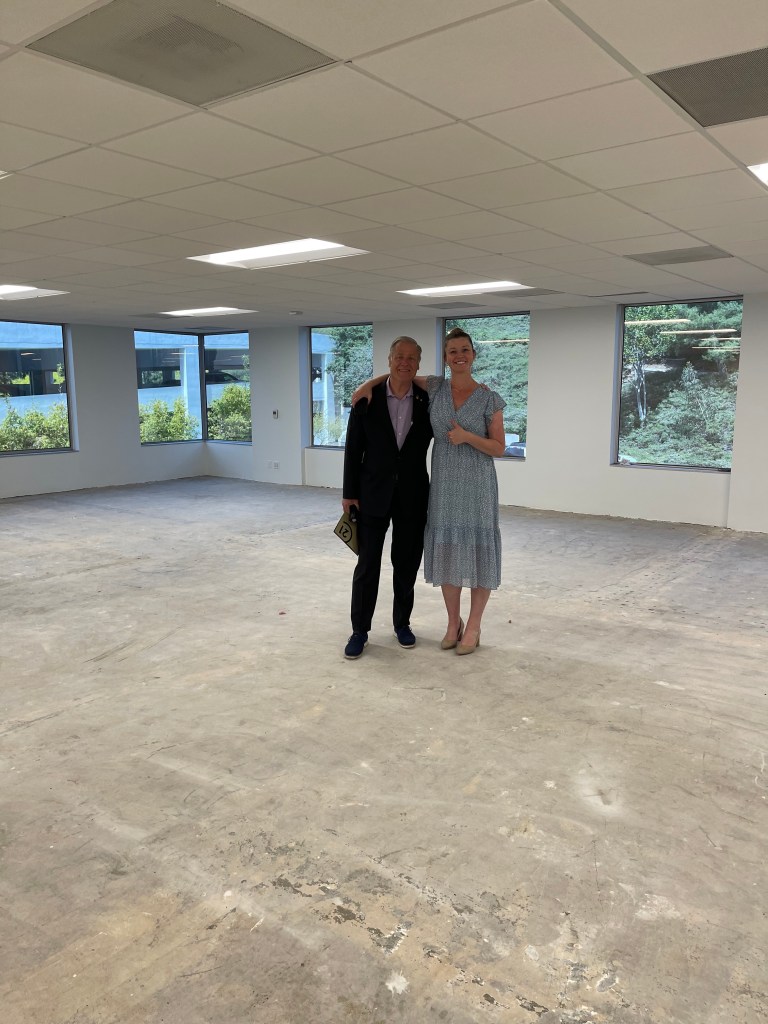
Our new space will have an open concept that will include a large conference room, collaboration spaces, two huddle rooms, several workstations and a few private offices as well as a media room for video and podcast recording.

Me and my daughter and business partner, Stephanie Goedl, standing in the empty office space before the build-out of our new office.

The on-site amenities will include a stocked fridge with drinks and snacks as well as the ability to print, copy or scan documents as needed. The front reception will have a staff member to greet the agent and their clients. Plus, it’s close to retail amenities with Starbucks, Ralphs grocery store and restaurants within walking distance.

Our new office suite is located in one of the landmark “Fullerton Towers” buildings. The location is a central North Orange County hub with easy access and plenty of parking.

We will continue to hold our shredding and e-waste recycling events for the community at our new location. Internally, we will continue to have our famous potluck parties and celebrations. Check out our social media to see what I mean! We recognize that agents are also social creatures and they crave interaction and collaboration that only happens when they come into the office.

Our goal with this new space is to have a place for our remote workers to call home when they need it and a place that reflects how today’s agents work. If you’d like to be invited to our Ribbon Cutting and Open House to see the space in person, send me an email at info@c21discovery.com.

Joe Lins

About the author: Joe Lins is President, CEO and Co-owner of CENTURY 21 Discovery. If you are interested in becoming part of the CENTURY 21 Discovery team or would like more information about our services, training and coaching we provide, contact Joe at 714.626.2069.

WHAT TO LOOK FOR IN A REAL ESTATE AGENT

By Joe Lins
August 7, 2023

When choosing a real estate agent, it’s essential to find someone who can effectively represent your interests and help you navigate the complexities of buying or selling property. Here are some key qualities and factors to consider when looking for a real estate agent:

Photo courtesy of Canva Pro

Experience and Expertise

Look for an agent with a proven track record of success in the real estate market. Experienced agents have likely encountered various situations and can handle challenges effectively. They should also be knowledgeable about the local market and real estate trends.

Licensing and Credentials

Ensure the agent is properly licensed and affiliated with a reputable real estate agency or brokerage. Additional certifications or credentials can also be a plus, as they demonstrate a commitment to ongoing professional development. Ask them if their brokerage provides additional training on industry changes and if they attend that training.

Reputation and References

Check online reviews and ask for references from past clients. A good agent should have positive feedback from satisfied customers who can vouch for their services.

Communication Skills

Effective communication is crucial in any real estate transaction. Your agent should be responsive, keep you updated regularly, and be able to explain complex terms or processes in a way that is easy to understand. Make sure they are able to communicate with you in the manner you prefer (e.g., text, email, phone call)

Market Knowledge

The agent should have a deep understanding of the local market conditions, property values, and neighborhood dynamics. They should be able to provide insights on the best time to buy or sell and guide you on pricing strategies.

Photo courtesy of Canva Pro

Negotiation Skills

A skilled negotiator can make a significant difference in the outcome of your real estate transaction. Look for an agent who can advocate for your interests, secure the best possible price, and navigate negotiations effectively.

Marketing Strategies

If you’re selling a property, inquire about the agent’s marketing plan. They should have a clear strategy to attract potential buyers and promote your property effectively, using both online and offline channels.

Integrity and Ethics

Choose an agent who operates with honesty and integrity. Your agent should prioritize your interests above their own. Keep in mind that not every agent is a REALTORâ. A REALTORâ is held to a strict code of ethics and can get fined or have their license restricted if they violate the code.

Compatibility and Rapport

You will likely be working closely with your real estate agent, so it’s essential to feel comfortable with them. Look for someone with whom you can communicate openly and who understands your needs and preferences. Many of our agents end up becoming close friends with their clients!

Availability and Accessibility

Real estate transactions can move quickly, so having an agent who is available and responsive is crucial. Make sure they can accommodate your schedule and be reachable when needed.

Photo of real estate agent on phone in front of a computer
Photo courtesy of Canva Pro

Tech-savviness

In today’s digital age, technology plays a significant role in real estate. A tech-savvy agent is more likely to leverage online tools and platforms effectively, which can benefit you during the buying or selling process.

By considering these factors and conducting thorough research, you can find a real estate agent who is the right fit for your needs and goals. Remember to interview multiple agents and ask relevant questions before making a final decision. Contact me and I can match you with a professional who fits these qualities and your goals.

Joe Lins

About the author: Joe Lins is President, CEO and Co-owner of CENTURY 21 Discovery. If you are interested in becoming part of the CENTURY 21 Discovery team or would like more information about our services, training and coaching we provide, contact Joe at 714.626.2069.

Secrets to Quality Customer Service

By Joe Lins
July 21, 2023

Quality customer service is crucial in the real estate industry to build trust, maintain positive relationships, and ensure repeat business and referrals. Here are some secrets to providing exceptional customer service in real estate:

Active listening

Understand your clients’ needs, preferences, and concerns by actively listening to them. Pay attention to their requirements and tailor your approach accordingly. When people feel heard they will make a connection with you.

Educate clients

Offer educational resources, guides, and checklists to help clients understand the buying or selling process better.

Responsiveness

Respond promptly to inquiries, calls, and emails. Being accessible and available to your clients demonstrates your commitment to their needs.

Regular communication

Keep your clients informed about the progress of their transaction, even if there are no significant updates. Regular communication reassures them that you’re actively working on their behalf. One of the biggest complaints in the industry about real estate agents is lack of communication. Don’t be that agent.

Knowledge and expertise

Stay informed about the real estate market, local trends, and regulations. Educate your clients about the process, helping them make well-informed decisions. In California, the regulations, forms and requirements are constantly changing. One of the things we pride ourself in at CENTURY 21 Discovery is the up-to-date training we provide our agents on the industry requirements.

Personalization

Treat each client as an individual, considering their unique requirements and preferences. Tailor your services to meet their specific needs. Keep in mind that every transaction is unique too.

Transparency

Be open and honest with your clients throughout the process. Transparency builds trust and credibility, which is vital in real estate.

Empathy and understanding

Buying or selling a home can be emotional. Show empathy and understanding towards your clients’ feelings and concerns. You live in the real estate world 24/7. Your client does not, so this is a whole new world for them. Be patient as you guide them through the process.

Flexibility and adaptability

Be flexible to accommodate your clients’ schedules and preferences. Real estate transactions can be unpredictable, and being adaptable helps in navigating unexpected situations. Have a conversation about this with your client at the very beginning to remind them that they need to be flexible too.

Anticipate needs

Proactively identify potential issues or challenges and address them before they become significant problems. This proactive approach shows your commitment to your clients’ best interests.

Professionalism

Present yourself professionally in appearance, behavior, and communication. Your professionalism reflects your dedication to providing excellent service.

Network of resources

Develop a network of reliable professionals (inspectors, lenders, contractors, etc.) to provide your clients with excellent referrals when needed.

Surveys and feedback

After a transaction, consider conducting surveys or seeking feedback from your clients. Constructive criticism can help you improve your services. At our company, we automatically send a survey to our clients at the close of every transaction. It’s a great way to see where improvement may be needed and it also allows them to give kudos to the agent.

After-sales service

Continue supporting your clients even after the transaction is complete. Offer assistance and remain available for any questions or concerns they may have. Put them on an email drip campaign to stay top-of-mind. It can be something as simple as sending them holiday greetings throughout the year.

Celebrate milestones

Celebrate significant milestones, such as closing the transaction, with your clients. This gesture shows appreciation for their business and builds a positive relationship.

Remember, quality customer service is not a one-time effort. It’s a continuous commitment to meeting and exceeding your clients’ expectations throughout their real estate journey. By focusing on these secrets, you can provide exceptional customer service and stand out in the competitive real estate market.

Joe Lins

About the author: Joe Lins is President, CEO and Co-owner of CENTURY 21 Discovery. If you are interested in becoming part of the CENTURY 21 Discovery team or would like more information about our services, training and coaching we provide, contact Joe at 714.626.2069.

Staging A Home To Sell For Top Dollar

By Stephanie Goedl
July 7, 2023

According to a report by the National Association of Realtors®, staging a home decreased the time on market and also increased the offer price in some instances. The Profile of Home Staging report cited that 81% of buyers’ agents said staging a home made it easier for a buyer to visualize the property as a future home.

Guiding your clients on staging their home properly can indeed help them sell it for top dollar. Here are some tips to help them stage their home effectively:

Declutter and Depersonalize
Start by decluttering and removing personal items like family photos, personal collections, and excessive decorations. A clean and clutter-free space allows potential buyers to envision themselves living in the house.

Deep Clean
Give the home a thorough cleaning from top to bottom. Pay attention to every room, including floors, windows, walls, and fixtures. A clean and fresh-smelling home creates a positive impression on buyers.

Enhance Curb Appeal
First impressions matter, so focus on improving the exterior. Trim the lawn, prune shrubs, plant flowers, and touch up any paint if necessary. Ensure the entrance is inviting by adding a new welcome mat, fresh paint to the front door, and attractive potted plants.

Neutralize Colors
Repaint bold or bright walls with neutral colors. Neutral tones create a blank canvas for buyers and make it easier for them to visualize their own furnishings in the space.

Furniture Placement
Arrange furniture to create an open and spacious feel. Remove any unnecessary pieces to make rooms appear larger. Rearrange furniture to maximize flow and highlight the best features of each room.

Create Inviting Spaces
Each room should have a defined purpose. Set up a cozy reading nook, a home office, or a guest bedroom. Add tasteful accessories such as throw pillows, rugs, and artwork to create warmth and appeal.

Maximize Natural Light
Open curtains and blinds to let in as much natural light as possible. Clean windows thoroughly to remove any grime or smudges that might obstruct the view.

Repair and Update
Take care of any visible repairs such as leaky faucets, loose door handles, or cracked tiles. Consider updating outdated fixtures, such as lighting or cabinet hardware, to give the home a more modern look.

Showcase Storage Space
Organize closets, cabinets, and storage areas to showcase their capacity. Buyers appreciate ample storage, so make sure it looks spacious and well-utilized.

Appeal to the Senses
Create a welcoming ambiance by adding fresh flowers, scented candles, or a subtle air freshener. Play soft, relaxing music during showings to set a positive mood.

Remember, staging is about highlighting the best features of the home while allowing potential buyers to imagine themselves living there. By following these tips, you can help increase the chances of your client selling their home for top dollar.

Photo of Stephanie Goedl

About the author: Stephanie Goedl is Chief Operating Officer and Broker/Owner of CENTURY 21 Discovery. If you are interested in becoming part of the CENTURY 21 Discovery team or would like more information about our services or training we provide contact us at 714.626.2069 or Careers@C21Discovery.com.

5 Habits You Should Start Now to Be Successful in Real Estate

By Joe Lins
June 15, 2023

To be successful in the real estate industry, it’s important to develop good habits that will set you up for long-term success. Here are five habits you should start now:

Photo Courtesy of Canva Pro
  1. Continuous Learning

Real estate is a dynamic field that requires staying up to date with market trends, regulations, and best practices. Develop a habit of continuous learning by reading books, attending seminars, taking courses, and staying connected with industry professionals. This will help you make informed decisions and stay ahead of the competition.

  1. Networking

Building a strong network is crucial in real estate. Make it a habit to network regularly by attending industry events, joining real estate associations, and connecting with other professionals in the field. Networking can lead to valuable partnerships, referrals, and new opportunities. Also, participating in community events is a great way to network and become known in the community as the real estate expert.

  1. Consistent Prospecting

Prospecting is the lifeblood of any real estate business. Develop a habit of consistent prospecting by setting aside dedicated time each day or week to identify and reach out to potential clients, investors, and partners. This can include cold calling, door knocking, online lead generation, or leveraging your network. Keep track of your prospecting and make notes to learn which one of your prospecting efforts produces the most results. Whether you use a notepad, an Excel spreadsheet or a CRM tool, keeping track will allow you to adjust and focus on what is working for your business. 

  1. Effective Time Management

Real estate professionals often juggle multiple tasks and deadlines. Cultivate good time management habits by prioritizing your activities, setting goals, and creating a daily or weekly schedule. Focus on high-value activities that directly contribute to your business growth and allocate time for prospecting, client meetings, property research, and administrative tasks. Use a calendar, paper or digital, to schedule these activities into your day.

  1. Excellent Communication Skills

Effective communication is essential in real estate. Develop strong communication habits by actively listening to your clients, responding promptly to inquiries, and conveying information clearly and professionally. Enhance your written and verbal communication skills through practice and seek feedback to improve further. If you need to improve your verbal communication skills, recruit a family member or fellow agent to role play various scenarios. For written communication, create templates to use for the various types of emails needed for your business. That way you won’t have to “reinvent the wheel” and can simply cut and paste the necessary information into the email each time. When creating these templates, do a spell check and run them through a program like Grammarly to identify any corrections needed. Another option would be to ask someone in the Marketing Department at your brokerage to proofread them.

Remember that success in real estate takes time and dedication. By adopting these habits, you’ll be well on your way to building a solid foundation for your career in the industry.

Joe Lins

About the author: Joe Lins is President, CEO and Co-owner of CENTURY 21 Discovery. If you are interested in becoming part of the CENTURY 21 Discovery team or would like more information about our services, training and coaching we provide, contact Joe at 714.626.2069.