REALTORS

3 Things Real Estate Agents Should Do Before the New Year

By Joe Lins
December 26, 2025

The week between Christmas and New Year’s is a great opportunity for real estate agents to get some important work done. Things tend to slow down, inboxes are quieter, and there’s a little more breathing room in the schedule. I’m going to share three simple things you can do during this in-between week that will help set you up for success in the coming year while also creating a less cluttered, more focused start to January.

Photo courtesy of Canva Pro

1. Reach out to your sphere of influence (SOI).
Call your SOI, yes, actually pick up the phone and call them. When they answer, keep it simple. Here are three easy questions to ask:

  • “How was your holiday?”
  • “What are your plans for New Year’s?”
  • “What are you most excited about for the coming year?”

After you ask the question, be quiet and listen. Really listen to what they’re saying and respond with thoughtful follow-up questions. Make the call about them, not you. The conversation may or may not turn to real estate, and that’s okay. This is simply a check-in call to see how they’re doing and where they’re at. These relationships matter, and staying connected without an agenda goes a long way.

2. Clean out your emails.
Use this quiet time to tackle some of the tedious work you avoid all year long. Go through your email and clean it out. If your inbox looks anything like mine, it’s probably bursting with junk. Somewhere along the way, you got added to countless email lists, and now your inbox is paying the price.

As you go through the process, unsubscribe from emails you never read or don’t need. Be sure to stay connected to emails from your brokerage, REALTOR® association, and Multiple Listing Service (MLS). This can take some time, so don’t feel like you have to do it all at once. Set aside an hour or so each day to click that “Delete” or “Unsubscribe” button. You’ll be amazed at how much lighter your inbox feels.

3. Commit to showing up.
A new year means a blank slate. Whether you use a paper planner or a digital calendar, pull it out and start marking important dates now. Add your office sales meetings and any regularly scheduled events that support your business and professional growth. Check your association’s calendar and plug in classes, networking events, and meetings you know you should attend, even if you don’t always feel like it.

Showing up consistently is one of the simplest ways to stay connected, informed, and top of mind. When these dates are already on your calendar, you’re far more likely to follow through. Treat these commitments like appointments with your future self and protect that time.

By putting these simple ideas into place, you will set the tone for the new year and hit the ground running.

Joe Lins

About the author: Joe Lins is President, CEO and Co-owner of CENTURY 21 Discovery. If you are interested in becoming part of the CENTURY 21 Discovery team or would like more information about our services, training and coaching we provide, contact Joe at 714.626.2069.


Your Holiday Party Survival Guide (for Real Estate Agents)

By Suzy Lins
October 21, 2025

With holiday parties just around the corner, you know it’s coming…the question every real estate agent gets asked: “So… how’s the market?”

Let’s make sure you’re ready with a confident, informed answer that positions you as the local expert – plus a few holiday party tips.

Photo Courtesy of Canva Pro

Do Your Homework

Before you head to your next gathering, carve out some time to check your MLS for the latest market stats. Most MLS platforms let you pull reports by city or zip code showing New Listings, Pending Sales, Closed Sales, Days on Market, and Average and Median Sale Prices.

These reports help you spot trends and compare data year-over-year or year-to-date. If you’re going to a party in a specific neighborhood, reviewing the numbers for that area shows that you really know your stuff. (And honestly, this is great to keep up with all year long!)

Talk to Your Lender

Another question you’ll probably hear: “What are interest rates right now?”

When you check in with your lender, they’ll probably tell you, “It depends.” Rates vary based on credit score, loan amount, loan type, and debt-to-income ratio. Instead of quoting a rate, ask your lender for a good way to respond.

A great go-to answer:

“That really depends on a few personal factors — but I can have my lender reach out to you with the most accurate info.”

This keeps the conversation professional and opens the door for a potential lead.

Bring Business Cards (and a Digital Backup)

Before you head out, grab a few business cards, but remember a key piece of etiquette: wait to be asked before handing them out. It’s more natural that way and makes a better impression.

It’s also smart to have a digital business card ready on your phone. Apps and sites like BlinqHiHello, or Online QR Generator let you create one quickly (and most have free versions). That way, you’re never without a way to share your contact info

Basic Party Etiquette

Good manners go a long way, both personally and professionally. Here are a few quick reminders:

  • RSVP promptly so the host can plan accordingly.
  • Arrive on time — generally within 15 minutes of the start time. Avoid showing up early!
  • Thank your host before you leave, and consider following up the next day with a quick text or, even better, a handwritten note.

These small gestures leave a lasting positive impression, which matters in a business built on relationships.

A little preparation and consideration can turn casual holiday conversations into meaningful connections. When someone at the party is later asked, “Do you know a good real estate agent?”, your name will be the first one that comes to mind.

Suzy Lins

About the author: Suzy Lins is the Communications Director for CENTURY 21 Discovery and a Business Etiquette Consultant. For more information about CENTURY 21 Discovery you may call (714) 626-2000.

The Real Estate Agent’s Guide to Using Your Phone Like a Pro

By Suzy Lins
July 21, 2025

A real estate agent’s most powerful tool isn’t a flashy website or a stack of business cards; it’s their mobile phone. It’s the lifeline of their business, connecting them to clients, leads, and opportunities at all hours. Yet, surprisingly, many agents aren’t using it to its full potential. In this post, we’ll explore simple and effective ways agents can optimize their phone habits to boost their business and present a more polished, professional image.

Answer Your Phone

As salespeople, it may seem obvious that agents would always answer their phones. Yet in reality, many don’t. Some agents rely solely on texting—and some even include that preference in the remarks section of their MLS listings. But in a relationship-based business like real estate, relying only on non-verbal communication is a missed opportunity. The tone, urgency, and emotion in someone’s voice can provide valuable context you won’t get from a text.

Then there are agents who won’t answer calls from unknown numbers. But how many potential leads are being missed simply because someone didn’t recognize the number? Most smartphones now label spam or telemarketing calls, so let technology work for you. A professional answers their phone, or, at the very least, returns the call promptly.

Your Outgoing Voicemail

When someone reaches your voicemail, what do they hear? Does it reflect the professional image you want to project? Take a moment to call yourself from another phone and listen.

A strong outgoing voicemail should include:

  • A friendly greeting
  • Your full name
  • Your brokerage name
  • A prompt for the caller to leave a message
  • (Optional) A timeframe for when they can expect a callback

Be mindful of your recording environment as well. Background noise can be distracting and sound careless. Avoid recording near busy streets, construction sites, or loud indoor spaces.

Your Voicemail Box

Few things are more frustrating than reaching someone’s voicemail only to hear, “This mailbox is full.” It signals disorganization and a lack of follow-through, two qualities you don’t want associated with your business.

Clean out your voicemail messages regularly. And remember: on many phones, deleted voicemails also need to be cleared from the “Deleted Messages” folder to truly free up space. Take a minute to test your voicemail and ensure everything is working properly.

Where Are You Making Your Calls?

Be aware of your surroundings when making or answering business calls. Background noise, whether it’s a sporting event, a crowded restaurant, or street traffic, can make you sound distracted and unprofessional.

If you need to take a call while you’re out and about, it’s okay to answer and politely ask to call back from a quieter location. This not only shows respect for your caller but also helps maintain the quality and focus of your conversation.

Also consider your client’s privacy. Avoid discussing sensitive details in public spaces or where conversations could be overheard. A little awareness goes a long way toward building trust and maintaining professionalism.

The bottom line is, your phone is more than just a tool for your business, it’s a reflection of your brand. Being intentional about how you answer calls, manage your voicemail, and communicate on the go will set you apart as a polished professional real estate agent. Small habits can make a big impression, and in this business, that impression could be the difference between winning or losing your next client.

Suzy Lins

About the author: Suzy Lins is the Communications Director for CENTURY 21 Discovery and a Business Etiquette Consultant. For more information about CENTURY 21 Discovery you may call (714) 626-2000.

From Likes to Listings: The Real Estate Agent’s Guide to a Social Media Audit

By Suzy Lins
January 21, 2024

Are you ready to be audited? Not by the IRS, but by yourself. It’s time for a social media audit! A social media audit is a review of all your business’s social media platforms, looking at various factors. I will break down the process here.

Photo Courtesy of Canva Pro

Make a List

Open a spreadsheet, Google Docs, or Notepad and write down all your social media accounts. List the name or handle of your account. The handle is your @[name of account]. It’s best to keep all your social media handles the same or as similar as you can. Sometimes that won’t be possible if your handle is taken on a specific platform. Consider changing any handle that does not match the others.

Brand Review

Next, write down how many followers you have and review the accounts for brand consistency. Look to see if you have the same information across all your profiles. This includes the profile photo, logo, bio, and any other information allowed in the profiles. Update accounts to create a uniform look across all your social media platforms.

Note any accounts that you do not post to or engage on. If you have an account you haven’t posted on in a while, consider deleting the account. If you’d rather not delete it, you can post to inform your followers that it’s not an active account and direct them to the platform where you are active. This allows you to keep the account handle if you decide to start posting to it in the future.

Content Review

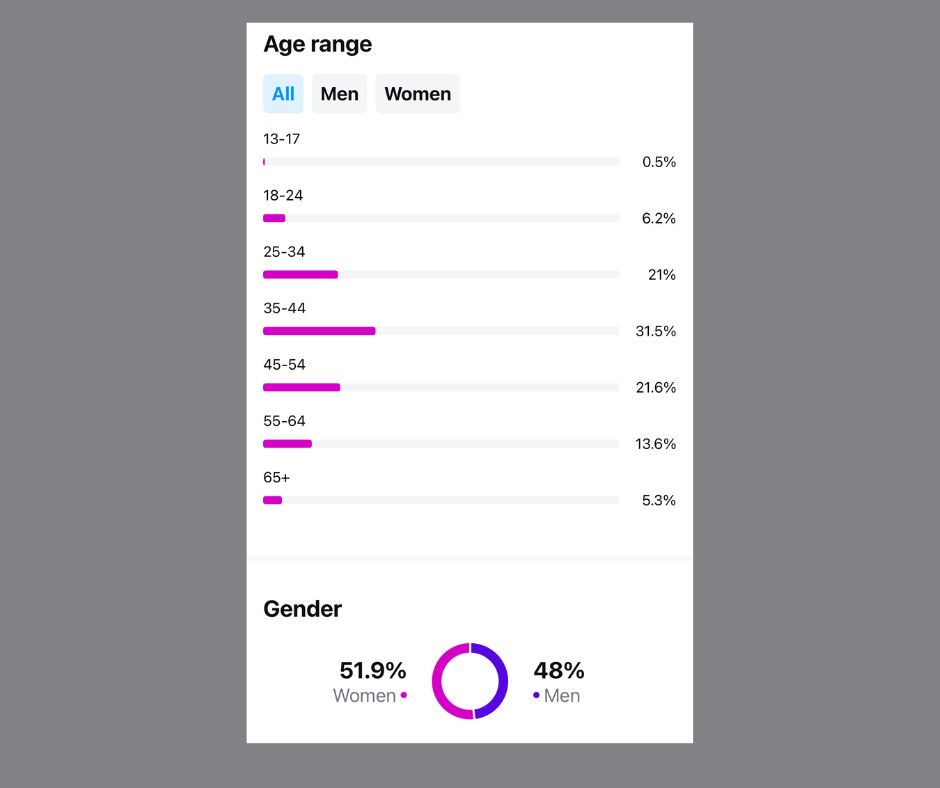
Next up is to review the content of your social media accounts. Include the type of content you are posting and the frequency. Make note of the content that is getting engagement. This is not just the number of likes. Look at the comments and how many times a specific post was shared. Look for patterns. Are your video posts getting more engagement than a photo post, or is it the opposite? If you really want to see what’s working and what is not, take a deep dive into the metrics of each post to analyze the impressions, reach, and engagement.

Audience insights from an Instagram account.
Audience Insights

Audience Insight

Check the insights on your account to understand your audience’s demographics and what type of posts resonate with them. You will be able to see your audience’s gender, age range, and top locations. You can also see what days of the week and times they are most active.

Once you have an idea of your audience, create a “persona” of your ideal client. A persona is a fictional character that represents a target client. Personas help you understand your customers’ needs, behaviors, and pain points. This persona will guide you as you develop your social media strategy and the types of posts you will create.

Competitor Review

Take a look at what your competitors are doing on social media. Identify what types of content are resonating with their followers and see if you can incorporate something similar into your social media content.

Goals

Once you’ve got a handle on where you are right now in your social media journey, you need to decide where you want to go. What are you trying to accomplish with your social media? Below are suggestions for types of goals that will help your career. Pick the ones that will help your business and that you will actually do. Then, develop your social media strategy around those goals.

Build a Strong Personal Brand

  • Showcase your expertise and personality to stand out in a competitive market.
  • Establish trust and relatability with their audience.

Generate Leads

  • Attract potential buyers and sellers through engaging content.
  • Use targeted ads or organic reach to expand their network.

Showcase Listings

  • Highlight properties for sale or rent through visually appealing posts.
  • Use video tours, before-and-after staging photos, or carousel posts to engage potential clients.

Educate Your Audience

  • Share market updates, home-buying tips, and selling advice.
  • Post content that addresses FAQs, such as “How to Get Your Home Ready for Sale.”

Engage with the Community

  • Build connections by promoting local businesses, events, and neighborhoods.
  • Position yourself as the community expert.

Increase Referrals and Word of Mouth

  • Stay top of mind with past clients and encourage them to share content or refer others.

Establish Credibility

  • Share testimonials, reviews, and success stories.
  • Highlight certifications, awards, and years of experience.

Humanize Your Business

  • Post behind-the-scenes content to show the human side of your work.
  • Celebrate milestones or share personal stories to connect with the audience on a deeper level.

Foster Client Relationships

  • Use direct messages and comments to engage one-on-one with clients and prospects.
  • Offer quick responses to inquiries or questions in a professional and friendly manner.

Leverage Visual Content

  • Use Instagram Reels, TikTok videos, or Facebook Lives to showcase dynamic, short-form content.
  • Post high-quality images and videos to make a lasting impression.

Ideally, a social media audit should be done quarterly if not monthly. I realize that sounds like a lot of work, but now that you’ve done all the heavy lifting, it’s just a matter of revisiting your content to see if it’s aligning with your goals and performing. If not, you can make adjustments to optimize your strategy. Incorporating this into your workflow or delegating it to an assistant will ensure that your social media is working in your favor and those “Likes” are turning into “Leads”.

Suzy Lins

About the author: Suzy Lins is the Communications Director for CENTURY 21 Discovery and a Business Etiquette Consultant. For more information about CENTURY 21 Discovery you may call (714) 626-2000.

Why Every Real Estate Agent Should Attend Their Brokerage’s Sales Meetings

By Joe Lins
June 2, 2024

Century 21 Discovery sales meeting attendees

As a real estate agent, your time is valuable. Between showings, client meetings, and administrative tasks, it’s easy to see why attending your brokerage’s sales meetings might not always be a top priority. However, regularly participating in these meetings can be one of the most beneficial habits for your career. Here’s why:

Networking and Relationship Building

Sales meetings provide a golden opportunity to network with fellow agents and industry professionals. Building relationships within your brokerage can lead to collaborations, referrals, and a strong support system. It’s also a chance to learn from the experiences and insights of others, which can be incredibly valuable, especially for newer agents.

Staying Updated on Market Trends

The real estate market is dynamic, with trends and conditions changing frequently. Sales meetings often include updates on local market conditions, recent sales data, and economic factors affecting the industry. Staying informed about these trends allows you to provide accurate and timely advice to your clients, setting you apart as a knowledgeable and trustworthy agent.

Century 21 Discovery sales meeting discussing new forms

Learning and Development

Most brokerages use sales meetings for ongoing education and professional development. Whether it’s a new sales technique, marketing strategy, or technology tool, these sessions offer valuable learning opportunities to enhance your skills and increase efficiency. Continued education is essential for staying competitive in the real estate market.

Motivation and Accountability

Sales meetings can serve as a source of motivation. Hearing success stories and strategies from top-performing agents can inspire you to set and achieve higher goals. Regularly attending these meetings can help keep you accountable to your goals and commitments, providing a structured environment to track your progress.

Access to Resources and Support

Brokerages often use sales meetings to introduce new tools, resources, and support services available to their agents. This can include marketing materials, lead generation services, or new software platforms designed to make your job easier. Being present ensures you won’t miss out on these valuable resources.

Sharing and Receiving Feedback

Sales meetings are an excellent forum for sharing challenges and seeking advice from colleagues and management. Whether you’re struggling with a difficult client, a complex transaction, or need advice on a negotiation strategy, your peers and leaders can provide feedback and solutions. Likewise, sharing your own experiences and successes can contribute to the collective knowledge of the group.

Century 21 Discovery sales meeting discussing goals

Staying Aligned with Brokerage Goals

Regular attendance at sales meetings ensures that you are aligned with your brokerage’s goals, values, and strategies. It helps you understand the bigger picture and how your efforts contribute to the overall success of the team. This alignment can lead to a more cohesive and collaborative work environment, ultimately benefiting everyone involved.

Recognition and Incentives

Many brokerages use sales meetings to recognize and reward their agents’ achievements. This recognition can boost morale and provide a sense of accomplishment. Incentives such as awards or public acknowledgment of your hard work can motivate you.

Conclusion

While it may be tempting to skip out on sales meetings due to a busy schedule, the benefits of attending far outweigh the time investment. From networking and learning to staying updated on market trends and accessing valuable resources, these meetings play a crucial role in your professional development and success as a real estate agent. Make it a priority to attend your brokerage’s sales meetings and watch your career thrive. If you would like to sit in on one of our sales meetings, call me.

Joe Lins

About the author: Joe Lins is President, CEO and Co-owner of CENTURY 21 Discovery. If you are interested in becoming part of the CENTURY 21 Discovery team or would like more information about our services, training and coaching we provide, contact Joe at 714.626.2069.

Why Choose A CENTURY 21 Discovery Agent?

By Joe Lins
May 2, 2024

It seems like everyone knows someone who knows someone who is a real estate agent. There’s a lot of us around! When choosing an agent there are many things to consider and I’m going to tell you why you should choose a CENTURY 21 Discovery agent. I think we have the best agents around. I may be a little biased but I’ll lay out the reasons why I believe they are.

Local Market Knowledge

Our CENTURY 21 Discovery agents have a clear understanding of what is going on in your local real estate market. A good agent can find out what’s going on in the market with a little research. A great agent knows exactly what is going on in the market on a daily basis. You want an agent who has their hand on the pulse of the market. We instill in our agents the importance of the knowing the communities they serve by constantly educating themselves on local market activity. Their knowledge will empower you as you price your home, review and accept offers or make an offer on that dream home.

International Reach

A CENTURY 21 Discovery agent has access through the Century 21 system to a network of agents across the country and across the world. Our listings are placed on a global site that allows the user to view the listing in their own language. If you’re moving out of the area, our agents can tap into that database of international agents, vet them, and find just the right one to meet your needs.

Industry Education

Forms and protocols in the real estate industry are constantly evolving and changing. CENTURY 21 Discovery is known in the local real estate world as the leader in training agents. This allows our agents to have the most current and up-to-date knowledge of the forms, rules and laws that must be adhered to in a real estate transaction. All this will help you avoid headaches and delays throughout the homebuying or selling process.

Leader In Marketing

Marketing a home for sale has become a bit more sophisticated than just putting a sign in the yard and an ad in the local paper. CENTURY 21 Discovery agents have access to a suite of tools that allow them to market the listings at a high level, in numerous ways, giving you peace of mind and the results you expect.

Community Involvement

A huge part of our company culture is giving back to the communities we serve. We encourage our agents to actively engage in community service and philanthropy to demonstrate their commitment to the well-being of the community.  Their involvement allows them to establish themselves as the go-to resource for all things related to real estate in the community. Through this they gain a deeper understanding of local market trends, preferences, and developments. This insight is invaluable for effectively serving clients and providing them with relevant information about the area.

Who’s Your Realtor?

One final reason why you should choose a CENTURY 21 Discovery agent to guide you in the most important sale or purchase of your life is because they are REALTORS. Not all real estate agents are REALTORS. To become a REALTOR an agent must join the National Association of REALTORS and adhere to a strict code of ethics. So, the bar is set higher for an agent to be able to use the word “REALTOR” with their name. 

If you are interviewing agents for the sale or purchase of real estate, make sure to ask them about these things: local market knowledge, international reach, industry education, marketing tools they will use to sell your home, community involvement and if they are a REALTOR. If they can’t provide you with answers about all these areas of the business, give me a call. I have the perfect agent for you.

Joe Lins

About the author: Joe Lins is President, CEO and Co-owner of CENTURY 21 Discovery. If you are interested in becoming part of the CENTURY 21 Discovery team or would like more information about our services, training and coaching we provide, contact Joe at 714.626.2069.

WHAT TO LOOK FOR IN A REAL ESTATE AGENT

By Joe Lins
August 7, 2023

When choosing a real estate agent, it’s essential to find someone who can effectively represent your interests and help you navigate the complexities of buying or selling property. Here are some key qualities and factors to consider when looking for a real estate agent:

Photo courtesy of Canva Pro

Experience and Expertise

Look for an agent with a proven track record of success in the real estate market. Experienced agents have likely encountered various situations and can handle challenges effectively. They should also be knowledgeable about the local market and real estate trends.

Licensing and Credentials

Ensure the agent is properly licensed and affiliated with a reputable real estate agency or brokerage. Additional certifications or credentials can also be a plus, as they demonstrate a commitment to ongoing professional development. Ask them if their brokerage provides additional training on industry changes and if they attend that training.

Reputation and References

Check online reviews and ask for references from past clients. A good agent should have positive feedback from satisfied customers who can vouch for their services.

Communication Skills

Effective communication is crucial in any real estate transaction. Your agent should be responsive, keep you updated regularly, and be able to explain complex terms or processes in a way that is easy to understand. Make sure they are able to communicate with you in the manner you prefer (e.g., text, email, phone call)

Market Knowledge

The agent should have a deep understanding of the local market conditions, property values, and neighborhood dynamics. They should be able to provide insights on the best time to buy or sell and guide you on pricing strategies.

Photo courtesy of Canva Pro

Negotiation Skills

A skilled negotiator can make a significant difference in the outcome of your real estate transaction. Look for an agent who can advocate for your interests, secure the best possible price, and navigate negotiations effectively.

Marketing Strategies

If you’re selling a property, inquire about the agent’s marketing plan. They should have a clear strategy to attract potential buyers and promote your property effectively, using both online and offline channels.

Integrity and Ethics

Choose an agent who operates with honesty and integrity. Your agent should prioritize your interests above their own. Keep in mind that not every agent is a REALTORâ. A REALTORâ is held to a strict code of ethics and can get fined or have their license restricted if they violate the code.

Compatibility and Rapport

You will likely be working closely with your real estate agent, so it’s essential to feel comfortable with them. Look for someone with whom you can communicate openly and who understands your needs and preferences. Many of our agents end up becoming close friends with their clients!

Availability and Accessibility

Real estate transactions can move quickly, so having an agent who is available and responsive is crucial. Make sure they can accommodate your schedule and be reachable when needed.

Photo of real estate agent on phone in front of a computer
Photo courtesy of Canva Pro

Tech-savviness

In today’s digital age, technology plays a significant role in real estate. A tech-savvy agent is more likely to leverage online tools and platforms effectively, which can benefit you during the buying or selling process.

By considering these factors and conducting thorough research, you can find a real estate agent who is the right fit for your needs and goals. Remember to interview multiple agents and ask relevant questions before making a final decision. Contact me and I can match you with a professional who fits these qualities and your goals.

Joe Lins

About the author: Joe Lins is President, CEO and Co-owner of CENTURY 21 Discovery. If you are interested in becoming part of the CENTURY 21 Discovery team or would like more information about our services, training and coaching we provide, contact Joe at 714.626.2069.

What is Title Insurance and Why do I need it?

By Joe Lins

August 11, 2021

I sat down with Collin Frangie of Ticor Title to talk about title insurance and why we need it in this latest episode of our podcast. Here is a partial transcript of our podcast. For the full podcast see the link below.

Joe Lins of Century 21 Discovery and Collin Frangie of Ticor Title talking during the podcast recording.

What is Property Title Insurance?

A Property Title is similar to a record of ownership with a vehicle. When you purchase a car, there’s a history of who owned it. The DMV keeps that title record. Property title is very similar. It’s a record of ownership of the home, which is kept at the county recorder’s office where your home is located. Title insurance companies insure that the person who owns the home has the legal right to ownership of the home.

What is a Title Search?

A Title Search is a search to see who actually owns the home and if there are any loans or liens against the property. Title searches are done by title companies, like Ticor Title. You can do your own title search if you want. You can go down to your county office and look through documents or on microfiche for properties built before 1975.

How Long Does A Title Search Take?

A typical search, if everything is digital, meaning the property was built after 1975, is usually one to three days. Now if the property was built prior to that, and it has not changed ownership since then, you’re looking at about a week. The title company has to hire someone to go down and do that microfiche search and compile all those records. Hiring someone to do this takes a little bit more time.

What about the property that was built in 1935, and it’s sold the 1956. And then it’s sold again in the year 2000. And now it’s getting ready to sell again, and they have to go back to 1935? How does that work? According to Collin, if it has been insured since 1975, they can go back and use that old insurance policy to date and then insure it forward from that date.

What type of issues can delay a policy and what happens if an issue surfaces?

One issue that can happen is when there is a private lien holder who has placed a lien against the property. If the title company can’t find the private beneficiary to get the reconveyance showing the loan was paid off it can hold up the title insurance. That is why agents should be getting a preliminary title report as soon as they take the listing so they can see if there are any issues that may come up.

How Are Costs Determined?

The cost for title insurance are fees that are filed with the state. They are pre-determined by the title company attorneys and increase about 3% per year with inflation. The fees are tied to the value of the home. The higher the value of the home the more liens that can be placed against it. Which means a bigger title insurance policy will be needed.

What is a Preliminary Title Report?

The preliminary title report, or Prelim, pulls the full chain of title for a property title search. Title companies also run the individual’s names to see if there are any judgements against them. It will also show any easements on the property. Everyone who is part of the transaction: Agent, Escrow, Title, Lender, should be reading the Prelim.

Listen to the full podcast on the link below. If you do you can also learn about an exciting event happening in Collin’s life!

Ep. 45 | What is Title Insurance and Why do I need it?
Joe Lins

About the author: Joe Lins is President, CEO and Co-owner of CENTURY 21 Discovery. If you are interested in becoming part of the CENTURY 21 Discovery team or would like more information about our services or training we provide, contact Joe at 714.626.2069.
Communicating With Confidence

By Joe Lins
August 12, 2020

Communicating is crucial in every industry, but in real estate it’s our life line. Every step of a transaction requires communication in some capacity. In this episode of our podcast we sat down with Bill Kurzeja of Professional Success South to learn his tips for communicating with confidence.

Listen to the podcast here:


Prefer video? Watch the video of the podcast here:


Joe Lins
About the author: Joe Lins is President, CEO and Co-owner of 
CENTURY 21 Discovery. If you are interested in becoming part of the CENTURY 21 Discovery team or would like more information about our services or training we provide, contact Joe at 714.626.2069.

Build A Database From Scratch

By Joe Lins
July 23, 2020

A database is a fundamental piece of a real estate agent’s toolkit. Creating a database and keeping it current requires diligence on the part of the agent. In this episode of our podcast we discuss how to create a database from scratch. Ticor Title Executive Collin Frangie provides valuable insight and tips on the process.

Listen to the podcast here:


Prefer video? Watch the video recording of the podcast here:


Joe Lins
About the author: Joe Lins is President, CEO and Co-owner of 
CENTURY 21 Discovery. If you are interested in becoming part of the CENTURY 21 Discovery team or would like more information about our services or training we provide, contact Joe at 714.626.2069.