Home Buyers

10 Common Questions About Home Inspections (And Why They Matter)

By Stephanie Goedl
May 21, 2025

When buying a home, there’s a lot to think about—offers, appraisals, escrow, and inspections. For many buyers, the home inspection process can feel like just another box to check. But it’s one of the most important steps in protecting your investment and making sure you’re fully informed about the property you’re purchasing.

Whether you’re a first-time buyer or just need a refresher, here are 10 common questions about home inspections—and why they matter.

Photo Courtesy of Canva pro

1. What is a home inspection, and do I really need one?

A home inspection is a professional evaluation of a property’s condition, typically done before finalizing a home purchase. Even if the house looks perfect, an inspection can reveal hidden issues that could cost thousands down the line, making it a wise investment for peace of mind.

2. What does a home inspection include?

Most inspections cover the home’s major systems and components, including the roof, plumbing, electrical, HVAC, foundation, attic, and appliances. After the inspection, you’ll receive a detailed report outlining any concerns, defects, or areas that might need attention.

3. What will it cost?

Costs can vary depending on the size, age, and location of the property, but most home inspections cost between $400 and $700. Although it may feel like an added expense, it’s a small price to pay for the valuable insights it provides.

4. Why can’t I do it myself?

Even if you’re handy, only a certified home inspector has the training, tools, and experience to identify structural, mechanical, and safety issues that may not be visible to the average buyer. Their objective report is crucial to making an informed decision.

5. Can a house fail a home inspection?

Not exactly. An inspection doesn’t result in a “pass” or “fail”—instead, it offers a snapshot of the home’s condition. It’s up to the buyer to decide how to move forward based on the findings.

6. How do I find a home inspector?

Your real estate agent can recommend trusted inspectors they’ve worked with. You can also search online or check professional organizations like ASHI (American Society of Home Inspectors) or InterNACHI for qualified professionals.

7. When do I call a home inspector?

Once your offer is accepted, you’ll schedule a home inspection during your contingency or due diligence period. Time is usually limited, so acting quickly is best to keep things moving forward.

8. Do I have to be there?

You’re not required to attend the inspection, but it’s highly recommended. Walking through the property with the inspector lets you ask questions in real time and see any potential issues firsthand.

9. What if the report reveals problems?

Almost every home has a few issues—it’s completely normal. Depending on what’s found, you may be able to negotiate with the seller for repairs, credits, or a price reduction. Your agent will help guide you through those conversations.

10. If the house is in good condition, did I need an inspection?

Yes! A clean report offers peace of mind and can help you plan for future maintenance. It’s reassurance that you’re making a sound investment—and that’s always worth it.

Final Thoughts

A home inspection isn’t just another step in the home-buying process—it’s a powerful tool that helps protect you from unexpected surprises. With the right inspector and guidance from your real estate agent, you’ll be in a much better position to move forward with confidence. At Century 21 Discovery, our agents are here to help you every step of the way.

Stephanie Goedl

About the author: Stephanie Goedl is Chief Operating Officer and Broker/Owner of CENTURY 21 Discovery. If you are interested in becoming part of the CENTURY 21 Discovery team or would like more information about our services we provide contact us at 714.626.2069 or Careers@C21Discovery.com.

Are You Ready for the Spring Selling Season?

By Joe Lins
March 21, 2025

Spring has traditionally been the time of year when the real estate market heats up. That was until COVID hit, and since then the last few springs have been anything but typical. Fortunately, 2025 looks to be a return to the traditional spring selling season, where more sellers are ready to put their homes on the market, and buyers are eager to make a move.

As a real estate agent, you need to be prepared to hit the ground running as the weather warms up. The spring market moves fast, and the agents who are best prepared will have a competitive edge. Here are some key steps to get you and your clients ready for a successful Spring Selling Season.

Reach Out to Sellers

Many homeowners have been hesitant to list their homes due to market uncertainties. Now is the time to reconnect with those sellers who have been on the fence.

  • Update Their Home Valuation – Provide an updated Comparative Market Analysis (CMA) to reflect the latest market conditions. Show them how their home compares to recent sales and active listings.
  • Refresh the Net Sheet – Give sellers an updated estimate of their potential net proceeds. Knowing their bottom line can be a powerful motivator to move forward.
  • Help Them Prepare – Offer guidance on home preparation, from decluttering to deep cleaning. Connect them with trusted vendors such as painters, landscapers, stagers, and handyman services to maximize their home’s appeal.
  • Boost Curb Appeal – Remind sellers that first impressions matter. Encourage them to spruce up their landscaping, paint the front door, and make minor repairs to create a welcoming entryway.

Additionally, set realistic expectations regarding pricing, marketing strategies, and timeline. Some sellers may not be aware of the nuances in pricing a home, so it’s essential to educate them on current trends.

Get Your Buyers Pre-Approved

With more buyers entering the market, competition will increase. Ensuring your buyers are financially prepared will give them a stronger position when making offers.

  • Confirm Pre-Approval Status – Some buyers may have been pre-approved months ago, and their financial situation or interest rates may have changed. Encourage them to get an updated pre-approval with a reputable lender.
  • Educate on Financial Do’s and Don’ts – Remind buyers not to make any large purchases, change jobs, or take on new debt before closing on their home. These actions can affect their loan approval.
  • Clarify Their Home Criteria – Work with your buyers to identify their non-negotiables versus their wish list. This will help them move quickly when the right home comes along.
  • Set Up Listing Alerts – Ensure your buyers receive real-time notifications when homes that match their criteria hit the market. In a competitive season, speed is crucial.
  • Network with Other Agents – Let your colleagues know what your buyers are looking for. Off-market or coming-soon listings might be a great match.

Get Your Checklists Ready

Having a well-organized system will save you time and keep your transactions running smoothly.

  • Listing Checklist – Review your process for onboarding new listings. Ensure you have a step-by-step guide that includes pricing strategy discussions, marketing plans, and open house scheduling.
  • Buyer Checklist – Streamline your buyer onboarding process. Have a clear roadmap that outlines financial steps, home tours, offer strategies, and next steps after escrow opens.
  • Marketing Materials – Update your digital and print marketing materials, including social media graphics, email templates, and flyers, to reflect the spring market.
  • Vendor List – Keep a list of trusted vendors ready to share with clients, from inspectors to moving companies. Being a one-stop resource enhances your value as an agent.

Watch Your Business Bloom

The spring selling season moves quickly, and the most prepared agents will thrive. By proactively reaching out to sellers, ensuring buyers are financially ready, and fine-tuning your systems, you’ll set yourself up for a busy and successful season.

Are you ready to make this your best spring yet? Start today, and watch your business bloom!

Joe Lins

About the author: Joe Lins is President, CEO and Co-owner of CENTURY 21 Discovery. If you are interested in becoming part of the CENTURY 21 Discovery team or would like more information about our services, training and coaching we provide, contact Joe at 714.626.2069.

Who Are You Listening To?

By Joe Lins
September 21, 2024

In today’s world, real estate information is everywhere—national news channels, online blogs, podcasts, social media influencers, and even dinner table conversations. With so many sources of information, it can be easy to get overwhelmed or misled. But whether you’re a real estate agent, buyer, seller, or just someone interested in the housing market, one important question remains: Who are you listening to for your real estate advice?

Getting information from the wrong sources can not only confuse you but may also lead to poor decisions when buying or selling property. Understanding where to find accurate, trustworthy, and relevant information is the key to making smart real estate choices.

For Real Estate Agents: Local Expertise Over National Pundits

As a real estate agent, your expertise and reputation are built on the knowledge you provide to clients. One of the biggest missteps agents can make is relying too heavily on national news for market updates. While national outlets may offer an overview of trends, they don’t account for the unique intricacies of local markets. What happens in Florida or New York doesn’t necessarily reflect the conditions in Southern California—or anywhere else, for that matter.

Instead, agents should rely on trusted local sources like their broker, regional MLS (Multiple Listing Service), or local Realtor associations. These resources offer timely, precise data and trends that reflect the reality of your local market. Your broker can provide valuable insights about local laws, regulations, and market conditions that are essential for your clients. Having this localized knowledge will improve your credibility as an agent and also equip you to provide the most accurate information to your clients.

For Buyers and Sellers: Listen to Your Trusted Realtor

If you’re a buyer or seller, your choice of whom to listen to can significantly impact the success of your real estate transaction. Too often, buyers and sellers make the mistake of basing their expectations on what they hear from national news sources or even a family member who heard something on the news. However, California’s real estate market, for example, operates very differently from other parts of the country. News stories about falling prices or interest rates might apply in other states, but they might not tell the full story in your local area.

Buyers and sellers should always turn to a licensed, experienced real estate agent in their community. A trusted agent understands the local market dynamics—like housing inventory, price fluctuations, and buyer demand—better than any broad national report. They can also provide personalized advice based on your unique situation. If you’re buying, they’ll help you navigate competitive offers, while if you’re selling, they’ll guide you on pricing strategy and the best time to list.

Your agent’s insights will be tailored specifically to your market, making them far more valuable than the one-size-fits-all approach often presented by news outlets or online forums.

Why Local Expertise Matters

The key takeaway for both agents and consumers is that real estate is inherently local. Trends, property values, and even buyer behavior can vary widely from city to city, even from neighborhood to neighborhood. Listening to experts who understand your market is crucial for making informed decisions.

For real estate agents, staying connected to local data and continuing education through your brokerage or professional organizations will ensure you are giving your clients the best advice. For buyers and sellers, working with a local agent who has their finger on the pulse of your community can make the difference between a successful transaction and a missed opportunity.

So next time you’re scrolling through your news feed or hearing about national housing trends, pause and ask yourself: Who am I listening to?

By focusing on local expertise and working with trusted professionals in your community, you can avoid the pitfalls of misinformation and make smarter, more informed real estate decisions. Whether you’re an agent advising clients or a buyer/seller navigating the market, remember that local knowledge is everything in real estate.

Joe Lins

About the author: Joe Lins is President, CEO and Co-owner of CENTURY 21 Discovery. If you are interested in becoming part of the CENTURY 21 Discovery team or would like more information about our services, training and coaching we provide, contact Joe at 714.626.2069.

Pre-Qualified vs. Pre-Approved: Which is Better for your Buyer?

By Joe Lins
August 21, 2024

In the home buying process, having your buyers understand the difference between being pre-qualified and pre-approved can significantly impact their ability to secure the home of their dreams. While both terms are often used interchangeably, they represent different levels of financial readiness and influence how seriously sellers will consider their offer.

During a recent episode of Market Matters, I talked with Ryan World from World Mortgage Group about this topic. Here’s what your clients need to know about pre-qualification and pre-approval and why one might be better for them in today’s real estate market.

Ryan World and Joe Lins – Market Matters Interview

What is Pre-Qualification?

Pre-qualification is often the first step in the mortgage process. It involves a simple, informal conversation between the buyer and the lender. According to Ryan World, this step gives them a basic idea of what the buyer might be able to borrow based on the information provided, such as income, assets, and debts. However, it’s important to note that pre-qualification doesn’t involve any formal verification of their financial status.

“Pre-qualification is just a verbal conversation,” says World. “I’m not a huge fan of it because it doesn’t give me everything I need to figure out how high of a sales price they qualify for or what loan programs they qualify for.” In essence, pre-qualification is an estimate—it’s helpful for getting a rough idea of their buying power but lacks the certainty that a more formal process would provide.

What is Pre-Approval?

On the other hand, pre-approval is a much more thorough process. It involves a detailed review of the applicant’s financial situation, including a credit check, verification of income and assets, and a more in-depth assessment of the applicant’s ability to repay the loan. This process results in a pre-approval letter, which the applicant can present to sellers as proof that they are a serious and qualified buyer.

“Pre-approval is much stronger,” explains World. “I look at their income documents, I look at their asset documents, and then we sit down and go over what they qualify for. This is all accurate stuff.”

Having a pre-approval letter in hand gives them the confidence to make offers and makes that offer more attractive to sellers. This can be the difference between securing the home they want and losing out to another buyer in competitive markets.

Why Pre-Approval is Often the Better Choice

When it comes to buying a home, pre-approval is typically the better option. As World points out, sellers are more likely to favor buyers who have been pre-approved because it shows that they are financially prepared to make a serious offer. Without pre-approval, they may struggle to compete against other buyers who have taken this step.

Moreover, pre-approval allows them to act quickly when they find the right property. Instead of waiting to go through the approval process after making an offer, they can move forward with confidence, knowing that their financing is already in place.

Final Thoughts

At Century 21 Discovery, we place a strong emphasis on strategy. Whether your clients are buying now or planning for the future, getting them pre-approved should be a key part of their homebuying strategy. It strengthens their offer and gives them peace of mind, knowing exactly where they stand financially.

If your client is considering purchasing a home in the next year, it’s never too early to get them pre-approved. If you need to connect them with a trusted lender, I highly recommend Ryan World and his team at World Mortgage Group. Here’s their contact info: Ryan World: 714-569-3636 Ext. 2

Joe Lins

About the author: Joe Lins is President, CEO and Co-owner of CENTURY 21 Discovery. If you are interested in becoming part of the CENTURY 21 Discovery team or would like more information about our services, training and coaching we provide, contact Joe at 714.626.2069.

Why Buyer Presentations Are Essential

By Joe Lins
August 2, 2024

The way we do business with Buyers is changing. Before we put the Buyer Representation and Broker Compensation Agreement (BRBC) in front of a Buyer to sign, we need to show the value and service we provide as a buyer’s agent. A well-prepared buyer presentation can be a game-changer, providing them with the insights and confidence they need to make informed decisions. 

Here’s an overview of what should be included in a comprehensive buyer presentation and why they should choose you as their agent.

Market Knowledge

A key reason to have me as your buyer’s agent is my extensive market knowledge. I am well-versed in:

  • Inventory of Homes: As your agent I have access to a wide range of properties, including those not yet listed publicly. This access allows you to see a broader selection of homes that fit your criteria.
  • Market Conditions: Understanding whether it’s a buyer’s or seller’s market can significantly influence your purchasing strategy. As your agent I can provide current data on market trends, giving you a competitive edge.
  • Comparable Sales: Knowing the sales prices of similar homes in the area helps you make a fair offer and avoid overpaying.

Local Expertise

Beyond just the market, local expertise is another critical factor:

  • Community Insights: As an agent who knows the community, I can offer invaluable information about the neighborhood, including schools, parks, amenities, and future developments that might impact your decision.
  • City Ordinances and Codes: Navigating local regulations can be complex. A knowledgeable agent can ensure that the properties you’re considering comply with all local laws, saving you potential headaches down the line.

Industry Knowledge and the Home Buying Process

Navigating the real estate industry requires familiarity with various forms, contracts, and processes. As your agent I will guide you through it all:

  • Forms and Contracts: Real estate transactions involve a significant amount of paperwork. As your agent I will ensure that all documents are correctly completed and submitted, protecting your interests.
  • Home Buying Process: From submitting offers to negotiating terms, I handle the intricate details, including collaboration with other agents and working with title companies, escrow companies, lenders, inspectors, and insurance companies. My relationships with these service providers will help ensure a smooth transaction.

What I Will Do for You

An agent’s role extends beyond simply finding a home. Here’s what I offer:

  • Personalized Service: I will listen to your needs and preferences, tailoring your search to find homes that match your criteria.
  • Professional Network: With connections to other professionals in the industry, I can recommend trusted inspectors, lenders, and other service providers, making the process seamless.
  • Negotiation Skills: As an experienced agent I know how to negotiate effectively on your behalf, striving to get you the best possible outcome.
  • Support and Guidance: From the initial search to closing, I will be there to answer questions, provide advice, and support you through every step of the home buying journey.

Highlighting Agent Experience and Credentials

A buyer presentation should also include detailed information about the agent’s background and qualifications:

  • Experience: How long have you been in the industry? What is your track record of success with buyers in your area?
  • Certifications: Relevant certifications should also be included, such as Accredited Buyer’s Representative (ABR), Certified Residential Specialist (CRS), or others that demonstrate a commitment to your profession and ongoing education.
  • Client Testimonials: Positive feedback from previous clients can provide insights into the effectiveness and client satisfaction.

In conclusion, a buyer presentation is more than just an overview of the home buying process; it’s a comprehensive guide that equips the Client with the knowledge needed to make the decision to hire you as their agent. At Century 21 Discovery we have a Buyer Presentation that can be personalized for each agent. Reach out to me to learn more about how I can help you prepare for the new way of working with Buyers.

Joe Lins

About the author: Joe Lins is President, CEO and Co-owner of CENTURY 21 Discovery. If you are interested in becoming part of the CENTURY 21 Discovery team or would like more information about our services, training and coaching we provide, contact Joe at 714.626.2069.

What’s Going On With Mortgages?

By Joe Lins
July 21, 2024

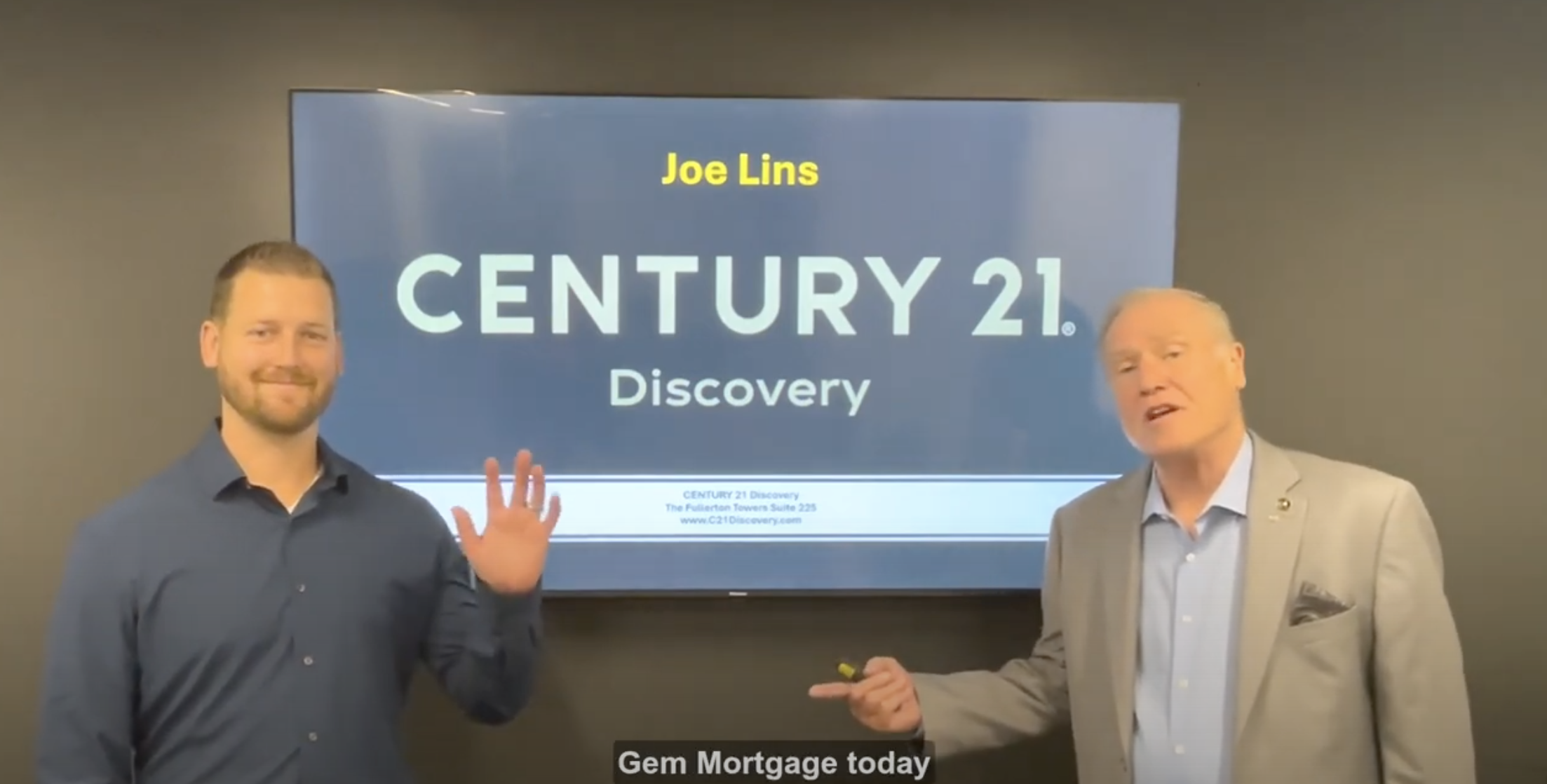
Recently, I had the pleasure of speaking with Ryan World from Gem Mortgage. We discussed the current mortgage landscape and what potential homebuyers need to know. For agents reading this, I encourage you to share this with your clients. Here’s a recap of what we covered in that conversation:

  • Different Loan Programs and Down Payments
  • Jumbo Loans
  • Current Interest Rates
  • Buying Now vs. Waiting to Buy
  • Having a Buyer Strategy
  • Why a Pre-Approval is Important

Different Loan Programs and Down Payments

Most people opt for conventional loans these days when it comes to loan programs. However, there are several options available:

  • VA Loans: Zero down payment.
  • FHA Loans: Requires a 3.5% down payment.
  • Conventional Loans: As low as 3% down unless it’s a high balance, which needs 5% down.
  • Jumbo Loans: Typically require around 20% down, though you can put less down for a higher interest rate.

Understanding Jumbo Loans

A jumbo loan is any amount exceeding the national conforming loan limit, which is currently $766,550 for Fannie Mae and Freddie Mac. These loans usually have better interest rates but are more challenging to qualify for.

Current Interest Rates

Interest rates are currently in the high sixes to low sevens. The market is quite volatile, and rates can change quickly based on economic indicators and Federal Reserve announcements. Recently, the Consumer Price Index released favorable news, causing a slight improvement in interest rates. However, market fluctuations are constant, and rates can shift based on new information.

Buying Now vs. Waiting for Lower Rates

A common question is whether to buy now or wait for interest rates to drop. Ryan suggests buying now, even with higher interest rates. The rationale is that if rates drop in the future, you can refinance. Waiting for lower rates could lead to increased home prices due to higher demand, making it more challenging to find a desirable property at a reasonable price.

The Importance of a Buyer Strategy

Buyers need a strategy, and one of the most crucial steps in buying a home is hiring the right REALTOR. A knowledgeable, competent real estate agent can guide you through the process to achieve your goals. Having a strategy in this fast-paced real estate market is important, and the right agent can help with this. Our CENTURY 21 Discovery agents are trained for exactly this!

Why Pre-Approval Matters

Getting pre-approved is essential. It helps you understand your budget, manage your expectations, and gives you confidence when working with your real estate agent as you start your home search. Knowing your financial standing upfront prevents disappointment and ensures you focus on homes within your price range.

Contact Information

Those interested in learning more about mortgage options or starting the pre-approval process can contact Ryan World at Gem Mortgage. His phone number is 714-569-3636, extension 2.  

Charge on!

You can watch the video of our conversation HERE.

You can listen to the conversation HERE.

Joe Lins

About the author: Joe Lins is President, CEO and Co-owner of CENTURY 21 Discovery. If you are interested in becoming part of the CENTURY 21 Discovery team or would like more information about our services, training and coaching we provide, contact Joe at 714.626.2069.

How to Be an Advocate for Your Buyer

By Joe Lins
May 21, 2024

Real estsate agent handing keys to a home buyer.
Photo Courtesy of Canva Pro

Your primary goal as a real estate agent is to help your clients find their dream home. At CENTURY 21 Discovery, we believe that being a strong advocate for your buyer is crucial in achieving this goal. Here are some essential tips on how to effectively represent and support your buyers throughout the home-buying process.

Understand Your Buyer’s Needs and Wants

The foundation of being a strong advocate is understanding exactly what your buyer is looking for. This involves:

  • Listening Actively: Pay close attention to their preferences regarding location, size, amenities, and budget.
  • Asking the Right Questions: Clarify any ambiguities and ensure you have a comprehensive understanding of their needs.
  • Prioritizing Their Must-Haves: Identify the non-negotiables versus the nice-to-haves to streamline your search.

Educate Your Buyers

Knowledge is power, and an informed buyer is a confident one. Ensure your buyers understand the intricacies of the home-buying process by:

  • Explaining the Market: Provide insights into the current real estate market conditions and how they affect buying decisions.
  • Detailing the Process: Walk them through each step, from pre-approval for a mortgage to closing the deal.
  • Highlighting Potential Pitfalls: Make them aware of common issues that could arise and how to avoid them.

Provide Honest and Objective Advice

Your clients rely on you to guide them through one of the most significant purchases of their lives. Offer honest and objective advice by:

  • Evaluating Properties Critically: Point out both the strengths and weaknesses of properties they are interested in.
  • Comparing Comps: Use comparable sales to help them understand the value of a property.
  • Advising on Offers: Assist them in making competitive yet realistic offers based on market data.

Negotiate Skillfully on Their Behalf

Negotiation is where your advocacy truly shines. To secure the best possible deal for your buyers:

  • Be Prepared: Gather all necessary information and anticipate potential counterarguments.
  • Stay Calm and Professional: Maintain a composed and respectful demeanor during negotiations.
  • Aim for Win-Win: Strive for outcomes that satisfy both parties to ensure a smooth transaction process.

Stay Available and Responsive

Real estate transactions can move quickly, and your availability can make a significant difference. Show your commitment by:

  • Being Accessible: Ensure your clients can reach you easily via phone, email, or text.
  • Responding Promptly: Address their queries and concerns as quickly as possible.
  • Providing Regular Updates: Keep them informed about the progress of their transaction and any new developments.

Offer Continued Support After Closing

Your role as an advocate doesn’t end at closing. Continue to provide value by:

  • Helping with the Move-In Process: Offer resources for movers, cleaners, and other services.
  • Addressing Post-Sale Issues: Assist them with any problems that may arise after they’ve moved in.
  • Staying in Touch: Keep in contact to ensure their satisfaction and to foster long-term relationships.

Conclusion

Being an advocate for your buyer involves more than just finding the right property; it requires dedication, knowledge, and a genuine commitment to their best interests. At CENTURY 21 Discovery, we pride ourselves on our ability to support our clients through every step of their home-buying journey. By following these guidelines, you can ensure that your buyers feel supported, informed, and confident in their decisions.

By becoming a true advocate for your buyers, you’ll not only help them achieve their dreams but also build a reputation as a trustworthy and dependable real estate agent. Happy house hunting!

Joe Lins

About the author: Joe Lins is President, CEO and Co-owner of CENTURY 21 Discovery. If you are interested in becoming part of the CENTURY 21 Discovery team or would like more information about our services, training and coaching we provide, contact Joe at 714.626.2069.

Why Buyer Letters Are A No-No

By Stephanie Goedl
June 11, 2021

(Transcript of our Podcast Ep. 41)

Hey, everybody, and welcome back. It’s Stephanie Goedl here. You know, it’s been a few months since we’ve recorded, we decided to take a short break to reevaluate our content and make sure that the education we are providing is relevant for what’s going on today. So, with that, let’s hop right in and jump into buyer letters.

Most of you are aware of Buyer Letters especially if you’ve been in the business for a long time. One way to really assist buyers in standing out when writing offers and when you’re up against multiple offers has always been to submit a Buyer Letter. However, now, that is kind of a No-No. I want to talk about that today and dive in just for a few minutes and talk about why that is. 

With everything that’s been going on in our country lately, there’s a lot of talk around discrimination, whether intentional or unintentional. When you dive into Buyer Letters, it’s something to really consider because your sellers sometimes are making a decision that’s based off of those letters, and not necessarily on the terms of the agreement.

The California Association of Realtors as well as our National Association of Realtors, have taken a stance against Buyer Letters and are really pushing that we should not be submitting those if there’s personal information or photos attached to those offers. To avoid that intentional or usually it’s unintentional bias or discrimination against those buyers.

Let’s just talk about an example really quick. Fun fact, actually, before we dive into that example, did you know that as of November 2020 there were 22 protected classes in the state of California. Back to my example. When you receive a letter, many times the buyers pour their heart and soul and tells their story as to why they want to purchase the home. Example: “This big backyard is perfect for my children to run around and play and get some fresh air.” Now, if you know that discrimination is not even in your mind, you can look at that and say, Wow, that’s wonderful, these three kids definitely need a place to run and play. I want to go with them. What’s the problem with that? If you are picking that offer, based on the fact that the letter really tugged at your heartstrings as a seller, you can be considered to violate the family status, which is a protected class. Especially when you’re looking at another offer from a single person who has no children.

You really want to avoid Buyer Letters because they have the potential to create a level of unintentional discrimination. If you’re a buyer’s agent you should avoid submitting those letters on behalf of your buyer. If you’re a listing agent, you want to have that conversation with your seller. And let them know that again, 98% of the time, I would say it’s very unintentional bias. But that being said, it’s still there, whether or not it’s being recognized. Let them know about the possible hiccups that can come with reviewing those offers and highly encourage them to look at the terms only, because this is a business transaction. As a professional REALTOR you need to encourage them to look at just the terms of the offer.

So how do you have that conversation with your seller? The California Association of Realtors has a great piece that you can actually share with your sellers that goes into this in a little bit more detail. And then get it in writing from them that they will not be accepting Buyer Letters. Also, put that into the MLS and have that conversation with the buyer’s agents on the other side and let them know the seller has decided not review any buyer letters. That keeps it very neutral and everybody in a really safe space. So, with that, I just wanted to pop on and give you a quick update on what has changed in our industry over the last few months. If you have any questions as always, do not hesitate to reach out. Can’t wait to see you on the next episode. Have a great day.

Listen to the Podcast here:

Ep.41 | Why Buyer Letters Are A No-No Discover Your Real Estate Career

Stephanie Goedl

About the author: Stephanie Goedl is Chief Operating Officer and Broker/Owner of CENTURY 21 Discovery. If you are interested in becoming part of the CENTURY 21 Discovery team or would like more information about our services or training we provide contact us at 714.626.2069 or Careers@C21Discovery.com.

How Do I Buy A Home During COVID-19?

By Joe Lins
May 5, 2020

Serious Buyers are asking “How do I buy a home during COVID-19?” People still need shelter and are looking for a home to buy. Let them know they can go through the home buying process while maintaining physical distancing and safe standards with these steps. These talking points will help you guide your Buyers as they find and purchase a home.


Joe Lins

About the author: Joe Lins is President, CEO and Co-owner of CENTURY 21 Discovery. If you are interested in becoming part of the CENTURY 21 Discovery team or would like more information about our services or training we provide contact Joe at 714.626.2069.

Don’t Forget The Homeowners Insurance

By Stephanie Goedl
June 26, 2019

Don’t Forget The Insurance

Have you ever had a real estate transaction that was held up until the buyer could obtain homeowners insurance? In this episode of our podcast insurance agent Michael Williams of Williams Insurance discusses the importance of starting the insurance process early and situations of fire-risk, flood insurance and past claims that could hold up the transaction.

Why Order The Policy Early?

Homeowners insurance is such a big piece of owning a home but it’s usually one of those last-minute items buyers think of in the home buying process. It really shouldn’t be. Michael suggests that once you open up escrow the buyer should contact their insurance agent. It’s not that hard to get an initial quote even before escrow or the lender start requesting information. One of the main reasons to start the process early is due to the fire exposures in our state. Unfortunately, the wildfires have been tremendous and Michael explained that they are reshaping how the industry works. He said that people are going to be very shocked to see their premiums change and a lot of non-renewals. Houses that you wouldn’t think are fire-risk are going to have a much more difficult time getting coverage.

Fire-Risk

I was in Sacramento recently for the annual California Association of Realtors conference and this was a hot topic. Fire-risk on properties is impacting the housing affordability. I asked Michael about the how the insurance industry is dealing with this. He explained that there is a system called “Fireline” that assesses the “score” of the house and the likelihood of exposure to a wildfire. That number combined with a special hazard square that they come up with determines whether a carrier wants to write a policy for a house in that area. The mapping for that is changing and also the acceptable scores are changing. Michael said carriers used to be much more lenient than they are now. Houses that you wouldn’t think have a brush exposure are getting denied.

There are a number of things that come into play when a home or area is “scored” through this system. They look at road access, utility quality, the wind and a number of different things that go into deciding whether it’s acceptable. Michael told us about a program the state runs called Fair Plan and how the insurance carriers partner with this government fund for hard-to-place risks. It can be a lot more expensive, on average a 25% increase over what most people expect their premiums to be. They will take higher risk properties but it’s more complicated and there are multiple layers of the policy.

Here’s a scenario that happens more often than you think and it is the exact reason you should encourage your buyers to start the insurance process early:

You’re nearing the close of escrow, the lender is requesting proof of homeowner’s insurance, you’ve removed contingencies and the buyer learns that the property is in what the insurer considers a high-risk area. Two things could derail this transaction – 1) The policy is more expensive than they can afford or 2) The property is uninsurable. What do you do now?

Flood Insurance

Another thing to consider is if the property is going to need flood insurance. Michael explained that they are re-mapping the flood zones which means that flood insurance is another policy that could be required by the lender. Homes that have not been required in the past to get flood insurance are now needing it. He reminded us that this requirement will be an additional cost to the buyer, so it‘s in everyone’s best interest to call the insurance agent as soon as possible to avoid surprises at the close of escrow.

Past Claims

Michael explained that insurance companies also look at “claims history” on the property. The claims history of the property made by the prior owner could affect the eligibility and rate for the buyer. Not all carriers have that stipulation but a number of them do. Another thing to keep in mind is the claims the buyer has had at their current property could actually follow them to the new property they are purchasing. This could also affect the rate and insurability of the property.

We hope this information will help you guide your buyers as they start the homebuying process. You don’t want to hold up an escrow with something that could have been avoided with a little bit of forewarning. Knowing these potential hold ups will allow you to get your buyer on the right track from the start.

Listen to the show to discover more about the insurance process for homebuyers.


Stephanie Goedl

About the author: Stephanie Goedl is Chief Operating Officer and Broker/Owner of CENTURY 21 Discovery. If you are interested in becoming part of the CENTURY 21 Discovery team or would like more information about our services or training we provide contact us at 714.626.2069 or Careers@C21Discovery.com.


Michael Williams is the president of Williams Insurance in Fullerton, California. They have been around since 1941. They are a Property and Casualty Agency that handles home, auto and umbrella policies as well as commercial, health and life insurance. You can reach Michael at 714-526-5588 or mwilliams@williamsinsurance.com.